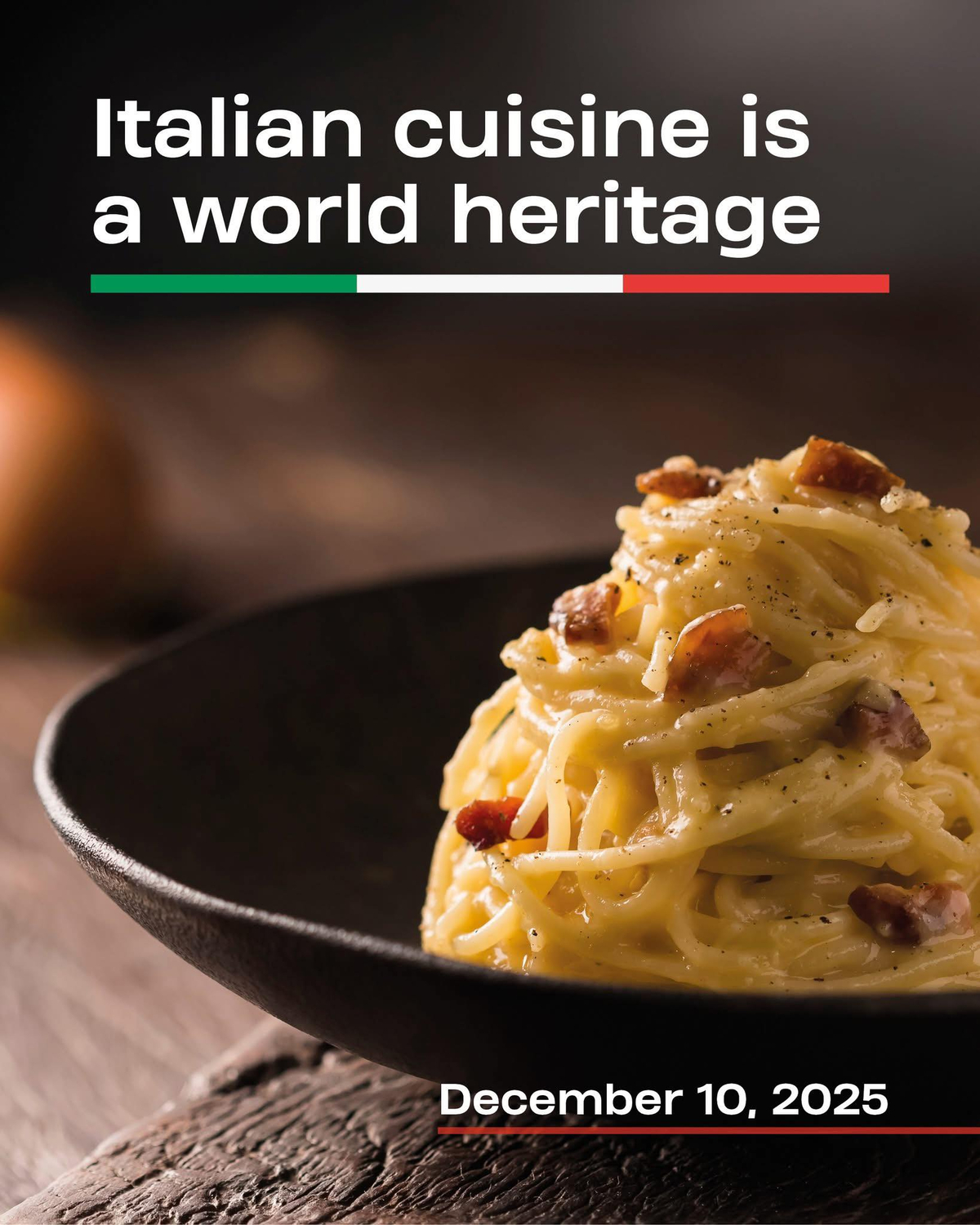
Italian cuisine added to UNESCO Intangible Cultural Heritage list
Italy
4 min read
Updated By: History Editorial Network (HEN)
Published:
Updated:
Italian cuisine has been officially added to UNESCO’s Intangible Cultural Heritage list, recognizing its deep cultural significance and enduring influence on communities both within Italy and around the world. The designation highlights Italian cuisine not merely as a collection of recipes, but as a living cultural tradition rooted in history, regional diversity, and social practices. Central to this recognition are the values of shared meals, local ingredients, traditional techniques, and the transmission of culinary knowledge across generations. From pasta-making and bread baking to olive oil production and seasonal cooking, Italian cuisine reflects a close relationship between people, land, and cultural identity, shaped over centuries by regional customs and historical exchange.
The inclusion of Italian cuisine on the UNESCO list carries important cultural and economic implications. It strengthens efforts to safeguard traditional food practices in the face of globalization, industrialization, and changing lifestyles. The recognition also supports local producers, artisans, and rural communities by promoting sustainable agriculture and authentic culinary heritage. Internationally, the designation reinforces Italy’s cultural soft power and acknowledges the global impact of its food culture, which has been adapted worldwide while retaining strong symbolic ties to its origins. UNESCO’s decision emphasizes that food traditions play a vital role in social cohesion and cultural continuity. Overall, the recognition of Italian cuisine as intangible cultural heritage affirms its role as a shared cultural expression that connects communities, preserves tradition, and celebrates the cultural value of everyday practices.
Primary Reference
Italian cooking, between sustainability and biocultural diversity

Explore the Life Moments of
 AI Twin