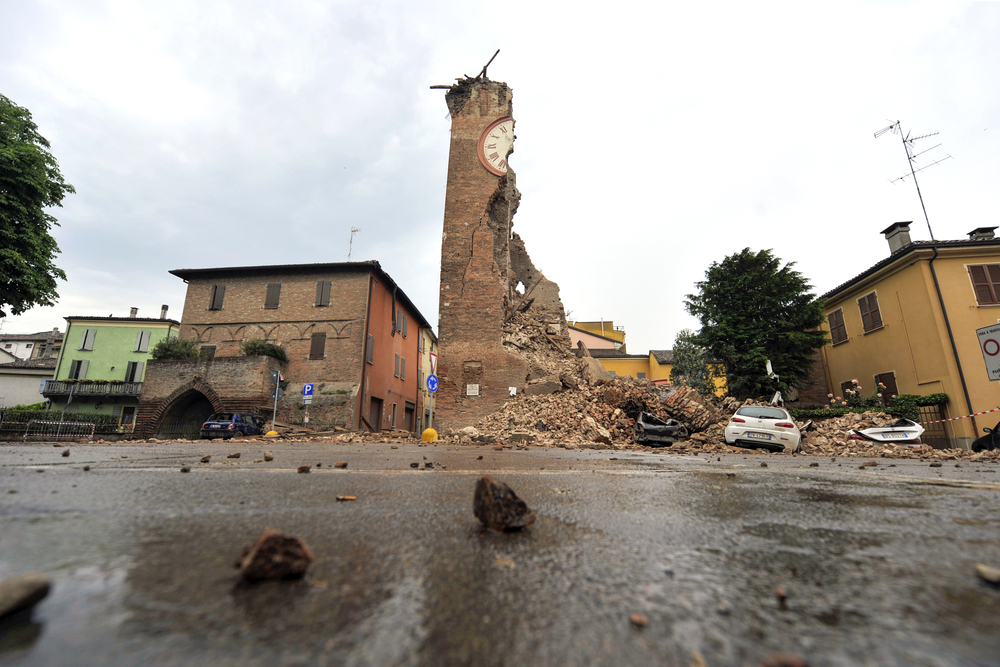
Emilia-Romagna earthquake
Italy
Natural Disaster
9 min read
Updated By: History Editorial Network (HEN)
Published:
On May 20, 2012, the Emilia-Romagna region in northern Italy was struck by a devastating earthquake that significantly impacted the area. This seismic event registered a magnitude of 6.1 (initially reported as 5.9) and occurred at 4:03 AM local time, with the epicenter near the small towns of Finale Emilia and San Felice sul Panaro in the province of Modena. This earthquake marked the beginning of a series of powerful aftershocks that continued to rattle the region for weeks, causing extensive damage and loss of life.
Geological Context and Immediate Impact:
The Emilia-Romagna earthquake was the result of the complex tectonic setting of the Po Plain, which lies at the convergence of the African and Eurasian plates. This area, although not typically known for high seismic activity, is subject to compressive forces that occasionally result in significant earthquakes. The shallow depth of the quake, approximately 6.3 kilometers, exacerbated its destructive power.
In the immediate aftermath, the earthquake caused significant structural damage. Many historical buildings, factories, and homes were severely affected. Notably, several medieval churches and towers, which are abundant in this culturally rich region, sustained major damage or collapsed. The industrial infrastructure was particularly hard-hit, leading to both economic disruptions and hazardous conditions.
Casualties and Economic Consequences:
The initial earthquake and subsequent aftershocks resulted in 27 deaths and approximately 350 injuries. Many of the casualties were workers on the night shift in factories, highlighting the earthquake's unexpected and tragic impact on the local labor force. The economic damage was substantial, estimated at around 13 billion euros. This figure includes not only the cost of rebuilding infrastructure and homes but also the loss of productivity in one of Italy’s key industrial regions.
Response and Recovery Efforts:
The Italian government and various emergency services responded promptly to the disaster. Rescue operations began immediately, with efforts to find survivors amidst the rubble and to provide aid to the injured and displaced. Temporary shelters were established for thousands of residents who were rendered homeless. The Italian Civil Protection Department coordinated with local authorities to ensure a rapid and effective response.
Reconstruction and recovery efforts focused on rebuilding infrastructure, restoring cultural heritage sites, and reviving the local economy. The resilience of the community played a crucial role in overcoming the disaster. Financial aid from both the Italian government and the European Union supported these efforts.
Cultural and Historical Significance:
Emilia-Romagna is renowned for its rich cultural heritage, including numerous UNESCO World Heritage sites. The earthquake’s impact on historical architecture underscored the vulnerability of these treasures to natural disasters. Restoration of damaged sites became a priority, not just for their cultural value but also for their role in local identity and tourism.
The earthquake also served as a catalyst for improving building codes and disaster preparedness in Italy. Lessons learned from this event have been applied to enhance the resilience of structures, particularly in earthquake-prone areas.
Long-term Effects and Lessons Learned:
In the years following the earthquake, Emilia-Romagna has seen substantial rebuilding and recovery. The event has heightened awareness of seismic risks in regions previously considered low-risk, prompting better preparedness and mitigation strategies nationwide.
The 2012 earthquake in Emilia-Romagna remains a poignant reminder of the sudden and severe impact of natural disasters. It highlighted the importance of emergency preparedness, resilient infrastructure, and the need for robust response mechanisms. The solidarity and determination of the people in Emilia-Romagna have been exemplary, showcasing the strength of community spirit in the face of adversity.
#EmiliaRomagnaEarthquake #2012Earthquake #ItalySeismicEvent #MomentsOfLife #MoofLife_Moment #MoofLife
Primary Reference
2012 Northern Italy earthquakes - Wikipedia

Explore the Life Moments of
 AI Twin