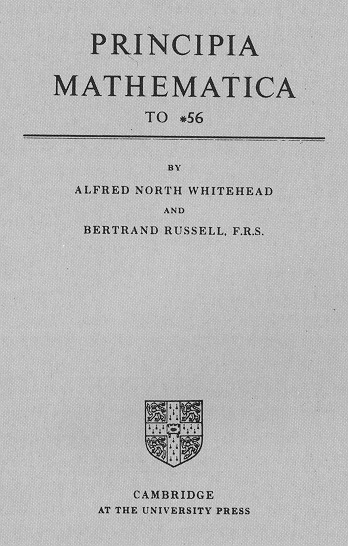
Second Edition of Principia Released
4 min read
Updated By: History Editorial Network (HEN)
Published:
Updated:
The second edition of Isaac Newton's 'Principia Mathematica', commonly referred to as 'Principia', was released to address various criticisms that had emerged following the initial publication. One of the primary criticisms directed at Newton was his introduction of what some termed 'occult agencies' into the realm of science. This criticism stemmed from his postulation of an invisible force that could exert influence over vast distances, a concept that challenged the prevailing scientific understanding of the time. In response to these critiques, Newton included a General Scholium in the second edition, where he firmly rejected the notion that his theories relied on such occult forces. He argued that the principles he proposed were grounded in observable phenomena and could be understood through rational inquiry. This defense not only reinforced his theories but also marked a pivotal moment in the evolution of scientific thought, as it emphasized the importance of empirical evidence and logical reasoning in the study of natural laws.
The impact of the second edition of 'Principia' extended beyond the immediate scientific community. It played a crucial role in shaping the future of physics and mathematics, laying the groundwork for classical mechanics. Newton's laws of motion and universal gravitation, articulated in this work, became foundational principles that influenced countless scientists and thinkers in subsequent generations. The second edition also contributed to the broader acceptance of the scientific method, encouraging a shift away from reliance on metaphysical explanations towards a framework based on observation and experimentation. As a result, 'Principia' not only solidified Newton's legacy as a leading figure in science but also catalyzed a transformation in how scientific inquiry was conducted, fostering an environment where questioning and testing ideas became paramount.
#mooflife
#MomentOfLife
#IsaacNewton
#PrincipiaMathematica
#ScientificMethod
#ClassicalMechanics
#GeneralScholium
Primary Reference
Principia Mathematica

Explore the Life Moments of
 AI Twin