Newton's Discovery of Light Spectrum Colors
Science
Physics
Optics
4 min read
Updated By: History Editorial Network (HEN)
Published:
Updated:
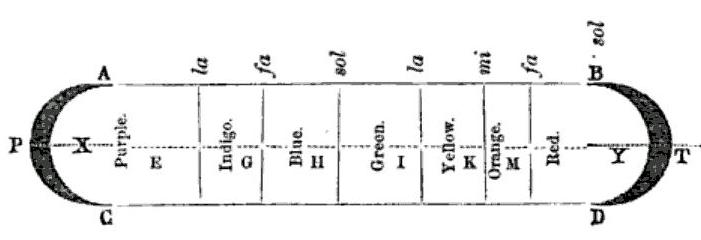
Isaac Newton's exploration of light and color fundamentally altered the understanding of optics and color theory. His experiments demonstrated that white light is composed of various colors, which can be separated using a prism. By passing light through a prism, Newton observed that it refracted into a spectrum of colors, which included red, orange, yellow, green, blue, indigo, and violet. This discovery led to the conclusion that color is not an inherent property of objects but rather a result of the interaction between light and the objects it illuminates. Newton's work established that colored light retains its properties regardless of the surfaces it interacts with, a concept that challenged previous notions of color perception. His findings were documented in a paper that laid the groundwork for future research in color and vision, influencing both scientific inquiry and artistic practices.
The impact of Newton's theory of color extended beyond the realm of physics; it also influenced the fields of art and design. Artists began to understand the importance of light in their work, leading to new techniques in painting and color mixing. The implications of his discoveries can be seen in the development of color theory, which has been essential in various disciplines, including photography, film, and digital media. Newton's contributions to the understanding of light and color have had lasting effects, shaping the way we perceive and utilize color in everyday life. His work remains a cornerstone in the study of optics and continues to inform contemporary research in color science.
#mooflife
#MomentOfLife
#IsaacNewton
#LightSpectrum
#ColorTheory
#Optics
#ScientificDiscovery

Explore the Life Moments of
 AI Twin