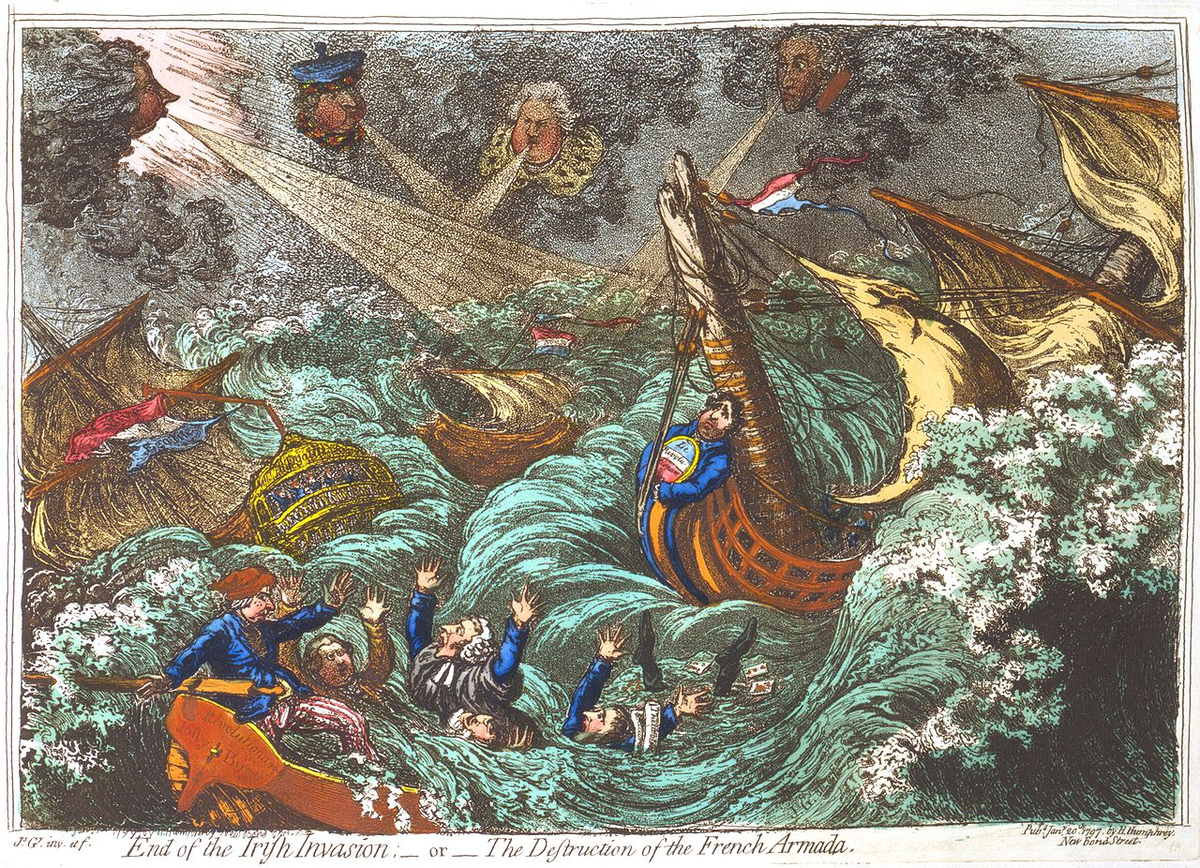
1798 Irish Rebellion: Failed bid for Irish independence from British rule through uprising for republic.
Ireland

Political
3 min read
Updated By: History Editorial Network (HEN)
Published:
The Irish Rebellion of 1798 was a significant uprising against British control in Ireland, aiming for an autonomous Irish republic. Rooted in grievances over sectarian discrimination, lack of political representation, and economic distress, the rebellion united Catholic and Protestant dissidents under the United Irishmen. Despite initial victories, the rebels faced a superior British military force and internal divisions. The uprising culminated in the decisive defeat at the Battle of Vinegar Hill, leading to widespread reprisals and atrocities by British forces. The rebellion collapsed, marking a violent end to the hopes for Irish independence.
The impact of the Irish Rebellion of 1798 was profound. It highlighted the deep-seated discontent and desire for self-governance among the Irish populace. The brutal suppression of the rebellion further fueled nationalist sentiment and laid the groundwork for future independence movements. The rebellion also spurred the Act of Union in 1801, merging the Irish and British parliaments and diminishing Ireland's autonomy.
Today, the Irish Rebellion of 1798 remains a key milestone in Ireland's struggle for independence and a symbol of resistance against colonial rule. It resonates with themes of national identity, political autonomy, and the enduring pursuit of freedom. #IrishRebellion #IndependenceStruggle #NationalIdentity
Primary Reference
Irish Rebellion of 1798 | National Army Museum

Explore the Life Moments of
 AI Twin