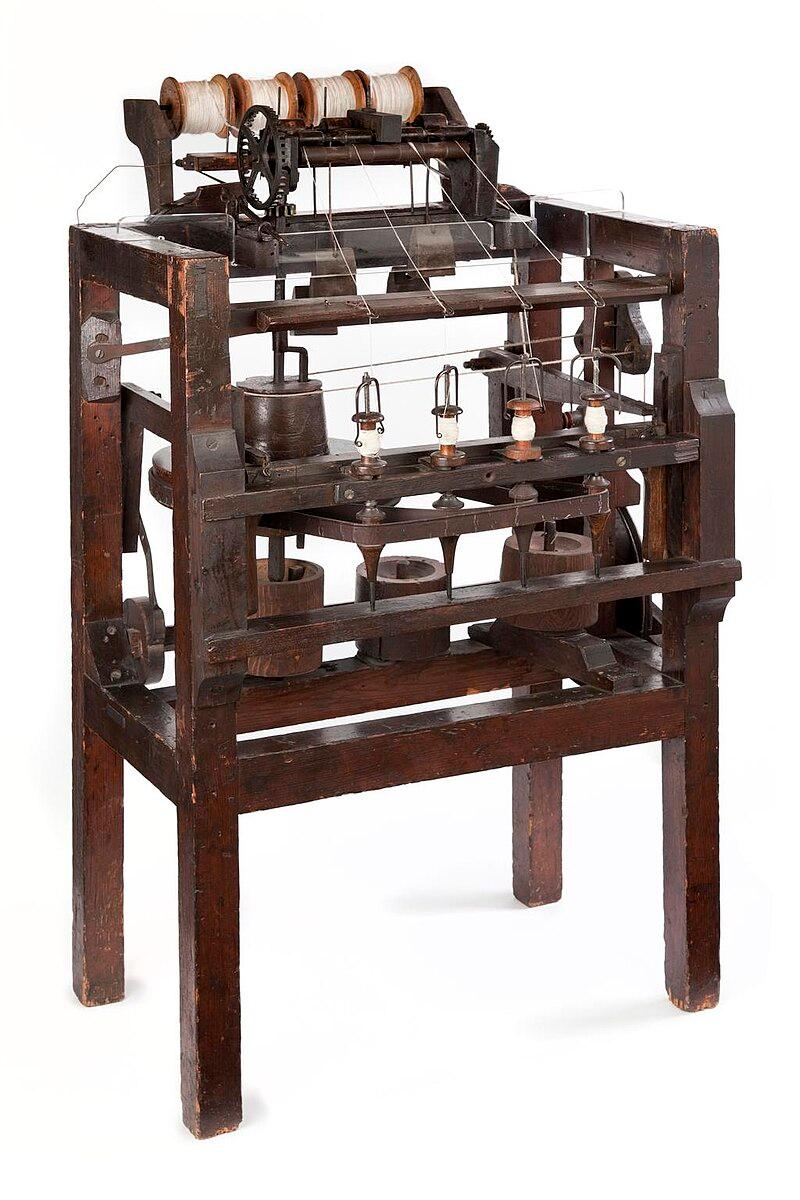
Richard Arkwright patented the water frame
United Kingdom
Industrial Revolution
Textile Manufacturing
Inventions
4 min read
Updated By: History Editorial Network (HEN)
Published:
Updated:
Richard Arkwright's invention of the water frame marked a pivotal advancement in the textile industry. The water frame was designed to produce a hard, medium-count thread that was suitable for warp, which was essential for weaving stronger fabrics. This innovation allowed for the mass production of 100% cotton cloth in Britain, significantly enhancing the quality and availability of textiles. The design of the water frame was influenced by earlier spinning machines, particularly one created by Kay, who was employed by Arkwright. This collaboration and adaptation of existing technology were crucial in the development of the water frame, which utilized water power to operate, thus increasing efficiency compared to manual spinning methods.
The impact of the water frame extended beyond just textile production; it played a vital role in the Industrial Revolution. By enabling the production of stronger and more durable fabrics, the water frame contributed to the growth of the cotton industry, which became a cornerstone of Britain's economy. The ability to produce cotton cloth in larger quantities at a lower cost helped to meet the rising demand for textiles both domestically and internationally. This innovation not only transformed manufacturing processes but also influenced labor patterns, as factories began to emerge, leading to a shift from home-based production to centralized industrial operations. The water frame's introduction is often seen as a key factor in the transition to modern manufacturing practices, setting the stage for further technological advancements in the textile sector.
#mooflife
#MomentOfLife
#RichardArkwright
#WaterFrame
#TextileIndustry
#IndustrialRevolution
#CottonProduction

Explore the Life Moments of
 AI Twin