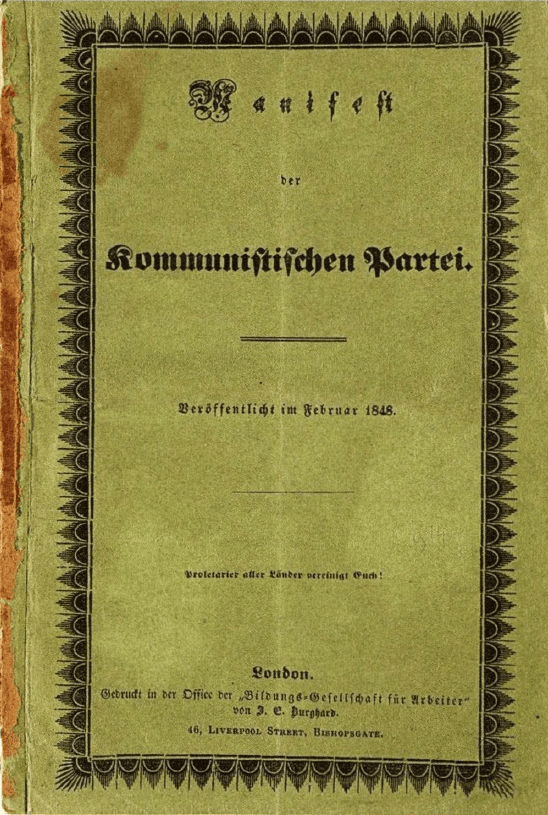
Publication of The Communist Manifesto
United Kingdom
Political Theory
Economic Systems
Historical Documents
4 min read
Updated By: History Editorial Network (HEN)
Published:
Updated:
The Communist Manifesto, authored by Karl Marx and Friedrich Engels, emerged from the socio-economic upheavals of the Industrial Revolution. This period marked a significant transformation in the structure of society, characterized by the rise of capitalism and the bourgeoisie, which led to stark class divisions. The manifesto was a response to these changes, articulating a vision for a classless society where the working class, or proletariat, would overthrow the capitalist class, or bourgeoisie. It outlined the struggles between these classes and called for collective action among workers to achieve their liberation. The text emphasized the need for a revolutionary movement to dismantle the existing capitalist structures that perpetuated inequality and exploitation.
The impact of The Communist Manifesto has been profound and far-reaching. It has served as a foundational text for various socialist and communist movements worldwide, influencing political ideologies and actions across different nations. The manifesto's call for class struggle resonated with many workers and intellectuals, leading to the formation of labor unions and political parties advocating for workers' rights. Over time, the ideas presented in the manifesto contributed to significant political changes, including the establishment of socialist states and the spread of communist ideology. The text remains a critical reference point in discussions about capitalism, class relations, and social justice, highlighting the ongoing relevance of its themes in contemporary socio-political discourse.
#mooflife
#MomentOfLife
#CommunistManifesto
#KarlMarx
#FriedrichEngels
#Socialism
#ClassStruggle
Primary Reference
The Communist Manifesto

Explore the Life Moments of
 AI Twin