Patent for Continuous Paper Machine
United Kingdom
Industrial Machinery
Paper Production
Historical Inventions
3 min read
Updated By: History Editorial Network (HEN)
Published:
Updated:
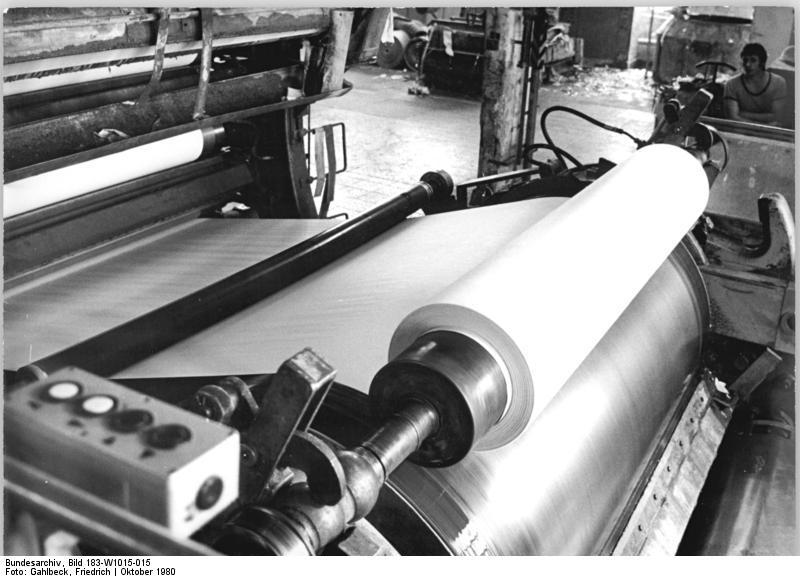
The invention of the continuous paper machine marked a pivotal advancement in the paper manufacturing industry. Patented by Louis-Nicolas Robert in France, this machine utilized a loop of wire fabric to produce a continuous sheet of paper. The design and functionality of this machine were later refined and popularized by the Fourdrinier brothers, Sealy and Henry, who were stationers in London. The Fourdrinier machine became the standard method for paper production, significantly increasing efficiency and output compared to previous batch methods. This innovation not only transformed the paper industry but also set a precedent for continuous production techniques in other manufacturing sectors.
The impact of the Fourdrinier machine extended beyond paper production. The principles of continuous manufacturing demonstrated by this machine influenced the development of similar processes in industries such as iron and steel. The ability to produce materials in a continuous flow allowed for greater consistency and reduced production costs. As a result, the Fourdrinier machine is recognized as a foundational technology that paved the way for modern manufacturing practices. Today, the Fourdrinier machine remains the predominant means of paper production, underscoring its lasting significance in industrial history.
#mooflife
#MomentOfLife
#ContinuousPaperMachine
#FourdrinierMachine
#Louis-nicolasRobert
#PaperManufacturing
#IndustrialInnovation
Primary Reference
Paper machine

Explore the Life Moments of
 AI Twin