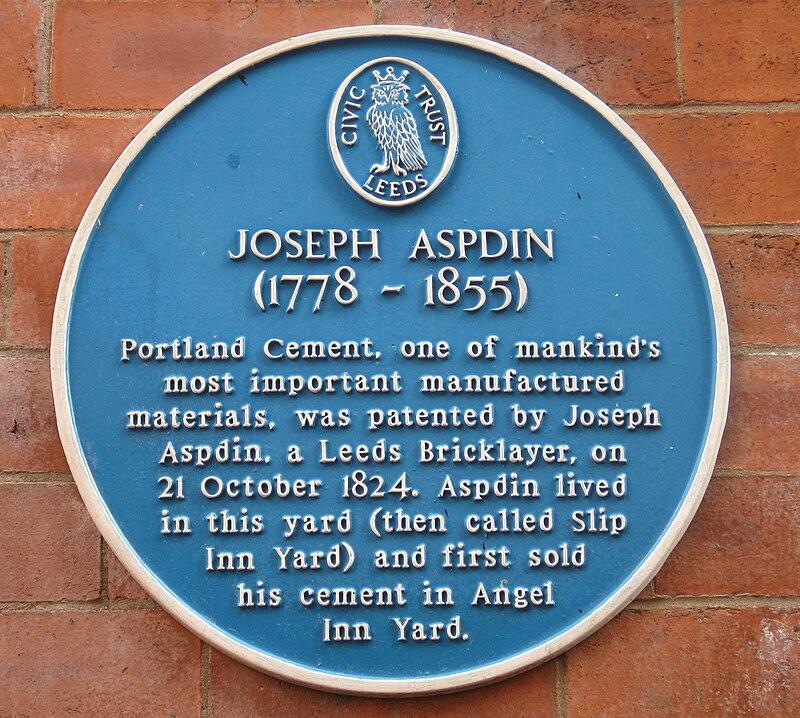
Joseph Aspdin Patents Portland Cement
United Kingdom
Construction
Materials Science
History of Engineering
3 min read
Updated By: History Editorial Network (HEN)
Published:
Updated:
Joseph Aspdin, a British bricklayer and builder, developed a chemical process for producing Portland cement, which he patented. This process involves the sintering of clay and limestone at high temperatures, approximately 1,400 °C (2,552 °F). The resulting material is then ground into a fine powder that can be mixed with water to create a strong binding agent. The invention of Portland cement marked a pivotal advancement in construction materials, providing a more durable and versatile option compared to previous binding agents. This innovation facilitated the construction of more robust structures and contributed to the development of modern architecture. The widespread adoption of Portland cement has had a lasting impact on the building industry, leading to the construction of infrastructure that supports urbanization and industrialization. Today, Portland cement is a fundamental component in concrete, which is one of the most widely used construction materials globally, accounting for a significant portion of the total cement production. The introduction of this material has enabled the construction of various structures, including bridges, roads, and buildings, thereby transforming the landscape of urban environments.
#mooflife
#MomentOfLife
#JosephAspdin
#PortlandCement
#ConstructionInnovation
#BuildingMaterials
#CementProduction

Explore the Life Moments of
 AI Twin