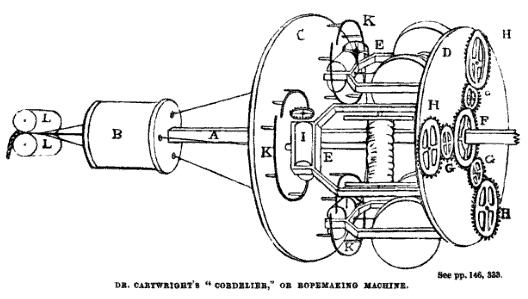
Edmund Cartwright developed a vertical power loom
United Kingdom
Industrial Revolution
Textile Manufacturing
Inventions and Patents
3 min read
Updated By: History Editorial Network (HEN)
Published:
Updated:
Edmund Cartwright, an English inventor, recognized the potential impact of the expiration of the Arkwright patent on the textile industry. This expiration was expected to significantly increase the supply of spun cotton, which would create a shortage of weavers to meet the growing demand for woven fabric. In response to this anticipated challenge, Cartwright developed a vertical power loom, a mechanized device designed to enhance the efficiency of the weaving process. He patented this invention, which marked a pivotal advancement in textile manufacturing. The vertical power loom allowed for the automation of weaving, reducing the reliance on manual labor and increasing production capacity.
The introduction of the power loom had a profound effect on the textile industry, facilitating the mass production of cloth and contributing to the Industrial Revolution. Following Cartwright's initial design, further improvements were made by other inventors, including Samuel Horrocks and Richard Roberts, who enhanced the loom's functionality and efficiency. These advancements led to the widespread adoption of power looms in factories, transforming the landscape of textile production. The shift from hand weaving to mechanized processes not only increased output but also altered labor dynamics, as fewer skilled weavers were needed, leading to significant changes in employment patterns within the industry.
#mooflife
#MomentOfLife
#EdmundCartwright
#PowerLoom
#TextileIndustry
#IndustrialRevolution
#Mechanization

Explore the Life Moments of
 AI Twin