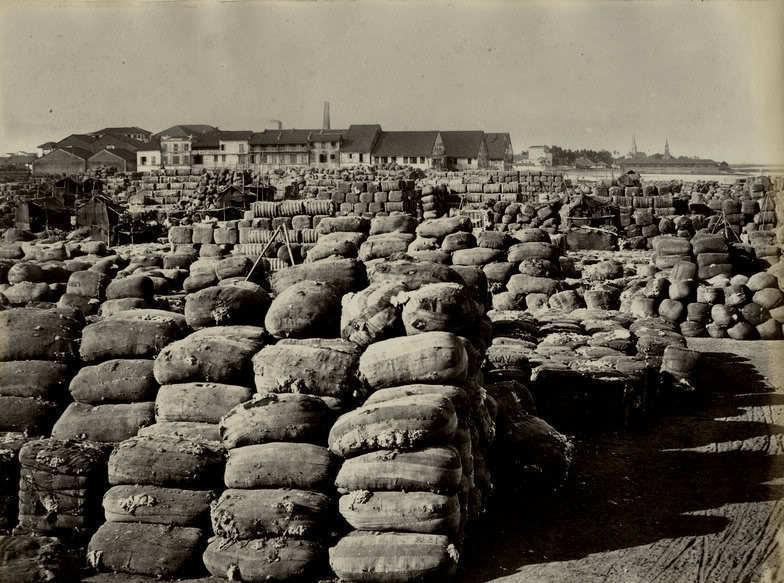
Britain Imports 2.5 Million Pounds of Raw Cotton
United Kingdom
Historical Trade
Textile Industry
Cottage Industry
3 min read
Updated By: History Editorial Network (HEN)
Published:
Updated:
In the mid-18th century, Britain saw a significant increase in the importation of raw cotton, totaling 2.5 million pounds. This raw material was primarily processed by the cottage industry in Lancashire, where workers engaged in spinning and weaving within their homes or in small workshops. The cottage industry was characterized by its decentralized nature, allowing individuals to work independently while contributing to the larger textile production. The wages for these workers were notably higher than those in India, with British wages being six times greater, reflecting the economic conditions and labor dynamics of the time. Productivity in Britain was also three times higher than in India, indicating a more efficient use of labor and resources in the textile sector. By the late 18th century, the consumption of raw cotton in Britain had escalated to 22 million pounds, showcasing the growing demand for cotton textiles. This increase in consumption was facilitated by advancements in cleaning, carding, and spinning processes, which were essential for transforming raw cotton into finished products. The reliance on imported raw cotton marked a pivotal shift in Britain's textile industry, laying the groundwork for future industrial developments and the eventual rise of mechanized production methods.
#mooflife
#MomentOfLife
#BritishTextileIndustry
#RawCottonImport
#LancashireCottageIndustry
#TextileProduction
#IndustrialRevolution

Explore the Life Moments of
 AI Twin