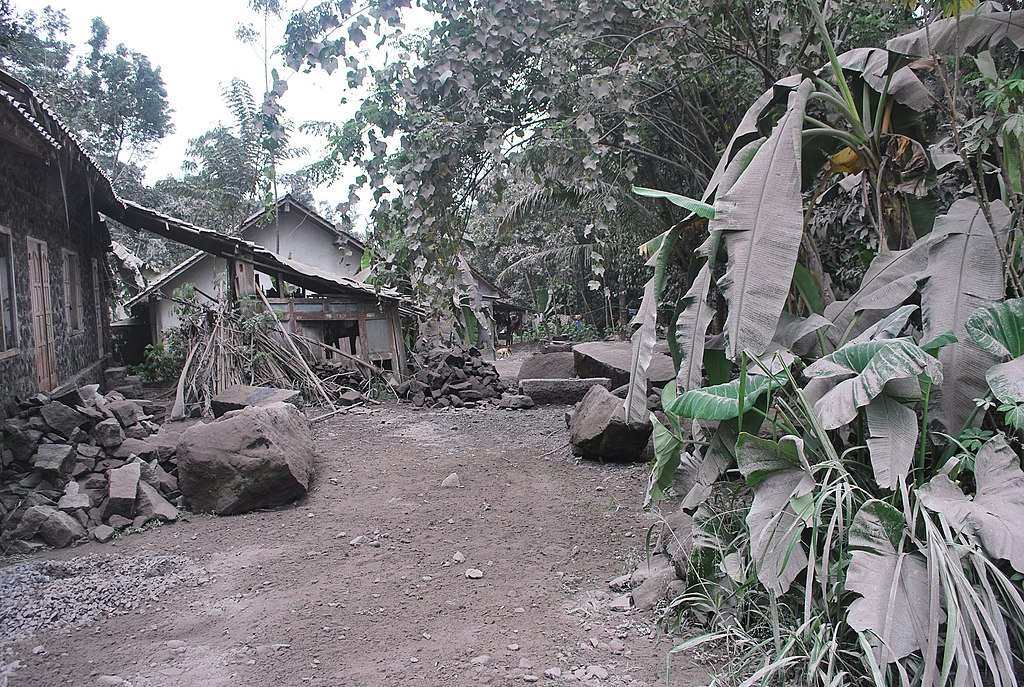
Mount Merapi eruption leads to evacuations and casualties.
Indonesia
Disaster Relief
Emergency Response
6 min read
Updated By: History Editorial Network (HEN)
Published:
Mount Merapi, one of Indonesia's most active volcanoes, erupted, leading to significant disruptions and human impact. The eruption caused a series of powerful pyroclastic flows, which sent hot ash, gas, and volcanic rock descending down the slopes at high speeds. Authorities immediately initiated evacuation protocols for the surrounding areas, primarily targeting the densely populated regions within a 10-kilometer radius of the volcano.
Emergency services reported extensive damage across several villages. Approximately 15,000 residents were evacuated to temporary shelters set up in safer zones. Despite efforts, the eruption resulted in 85 confirmed casualties, primarily caused by the fast-moving pyroclastic flows and collapsing structures. The Indonesian National Board for Disaster Management (BNPB) coordinated the response, deploying personnel to aid in rescue and relief operations. Medical teams were on-site to treat injuries and provide necessary healthcare services to the affected population.
The eruption disrupted daily life and essential services in the region. Ash clouds from the eruption forced the temporary closure of nearby airports, affecting air travel and causing delays and cancellations of numerous flights. Agriculture in the vicinity also suffered, with layers of ash covering crops, leading to potential economic losses for local farmers.
Experts from the Geological Agency of Indonesia monitored Mount Merapi closely in the buildup to the eruption. Increased seismic activity and gas emissions from the volcano were observed, prompting the government to issue warnings and elevate the alert level. Despite early warnings, the rapid escalation of volcanic activity made it challenging to prevent all casualties.
Historically, Mount Merapi has been known for its frequent eruptions, with major events recorded in the past causing similar disruptions. The volcano's activity is part of the broader Pacific Ring of Fire, a region characterized by frequent seismic activity and volcanic eruptions. The Indonesian archipelago experiences these natural events due to its location along tectonic plate boundaries, making disaster preparedness a critical focus for authorities and communities.
The response to the eruption underscored the importance of early warning systems, community awareness, and efficient evacuation plans in minimizing the human toll of such natural disasters. Efforts to rebuild and support the affected communities continue in the aftermath of the eruption.
#MountMerapi #VolcanoEruption #Indonesia #DisasterRelief #EmergencyResponse #CommunityResilience #BNPB #MoofLife
Primary Reference
Mount Marapi: Indonesia volcano death toll rises to 22

Explore the Life Moments of
 AI Twin