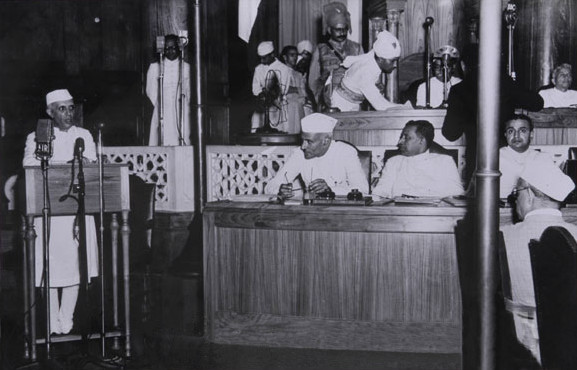
Independence from British Rule

Political
4 min read
Updated By: History Editorial Network (HEN)
Published:
Updated:
After nearly two centuries under British colonial rule, India, with its rich history and diverse culture, emerged victorious in its struggle for independence. The movement, led by iconic figures like Mahatma Gandhi and Jawaharlal Nehru, gained momentum through nonviolent resistance and civil disobedience. The Salt March, Quit India Movement, and numerous protests were pivotal moments in the nation's fight for autonomy.
India's independence marked a turning point not only in the country's history but also in the global struggle against colonialism. The end of British rule paved the way for the establishment of the world's largest democracy. With newfound freedom, India embarked on a journey of self-governance, focusing on nation-building and development.
However, the partition of the subcontinent into India and Pakistan led to one of the largest mass migrations in history, accompanied by tragic communal violence. The scars of partition continue to impact the region to this day.
Independence brought challenges as well as opportunities for India. The task of nation-building and fostering unity among its diverse population was no small feat. Over the years, India has made significant strides in various fields, including politics, economy, and culture. The country's rich heritage and democratic values have solidified its position on the world stage.
As the world's largest democracy, India continues to strive for progress and inclusive growth while upholding its commitment to pluralism and diversity. The legacy of its independence movement serves as a reminder of the power of nonviolent resistance and the importance of unity in diversity.
#IndiaIndependence #ColonialLegacy #NonviolentResistance #NationBuilding
Explore the Life Moments of
 AI Twin