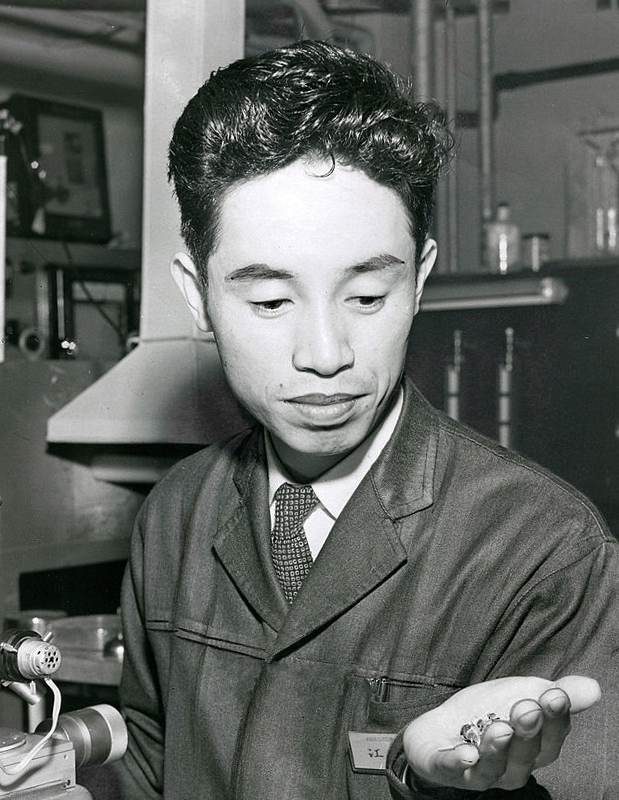
Nobel Prize in Physics Awarded to Leo Esaki
Stockholm, Stockholms kommun, Stockholms län, 111 29, Sverige
Physics
Nobel Prize Winners
Semiconductor Research
4 min read
Updated By: History Editorial Network (HEN)
Published:
Updated:
Leo Esaki, a physicist associated with the Thomas J. Watson Research Center, was awarded the Nobel Prize in Physics for his contributions to the field of semiconductors. His research focused on the tunneling phenomenon in semiconductors, which has had a profound impact on the development of electronic devices. Esaki's work laid the groundwork for the invention of the tunnel diode, a crucial component in various electronic applications. The tunnel diode operates on the principle of quantum tunneling, allowing for rapid switching and amplification of signals, which has been essential in the advancement of high-speed electronics and communication technologies. The recognition of Esaki's work highlights the importance of semiconductor technology in modern electronics, which has transformed industries ranging from computing to telecommunications.
The impact of Esaki's research extends beyond the immediate applications of his inventions. The principles he explored have influenced the design and functionality of numerous electronic devices, contributing to the miniaturization and efficiency of technology. The semiconductor industry has grown exponentially, with global revenues reaching hundreds of billions of dollars, underscoring the critical role that innovations in this field play in the global economy. Esaki's achievements not only reflect his individual contributions but also signify the collaborative efforts within the scientific community that drive technological progress. His Nobel Prize serves as a reminder of the ongoing importance of research in physics and engineering, as it continues to shape the future of technology and its applications in everyday life.
#mooflife
#MomentOfLife
#NobelPrize
#LeoEsaki
#Physics
#Semiconductors
#TunnelDiode

Explore the Life Moments of
 AI Twin