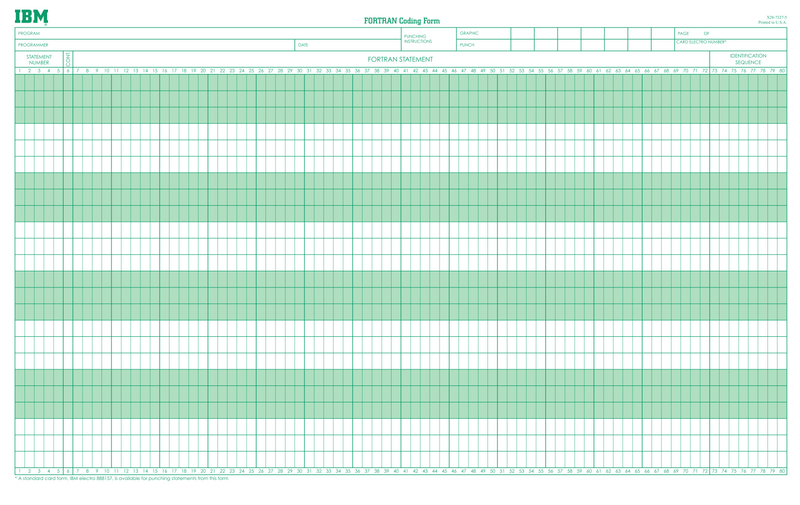
Development of FORTRAN programming language
unknown, Laharighat, Marigaon, Assam, India
Programming Languages
Computer Science
History of Computing
4 min read
Updated By: History Editorial Network (HEN)
Published:
Updated:
FORTRAN, short for Formula Translation, is one of the earliest high-level programming languages designed specifically for scientific and engineering applications. Its development marked a pivotal shift in programming, moving away from machine-level coding to a more abstract and user-friendly approach. The language was created to facilitate complex mathematical computations and to enable scientists and engineers to write programs that could be easily understood and modified. This was particularly important at a time when programming was largely done in assembly language, which was cumbersome and error-prone. The introduction of FORTRAN allowed for more efficient coding practices and significantly reduced the time required to develop software for scientific research.
The impact of FORTRAN on the field of computing has been profound. It became the standard language for scientific computing and was widely adopted in academia and industry. Many of the concepts introduced in FORTRAN, such as structured programming and the use of libraries, have influenced the development of subsequent programming languages. Statistics indicate that FORTRAN has been used in various applications, from weather forecasting to computational fluid dynamics, demonstrating its versatility and longevity. Despite the emergence of newer programming languages, FORTRAN remains in use today, particularly in legacy systems and high-performance computing environments, underscoring its foundational role in the evolution of programming languages.
#mooflife
#MomentOfLife
#Fortran
#ProgrammingLanguage
#ScientificComputing
#SoftwareDevelopment
#High-levelProgramming

Explore the Life Moments of
 AI Twin