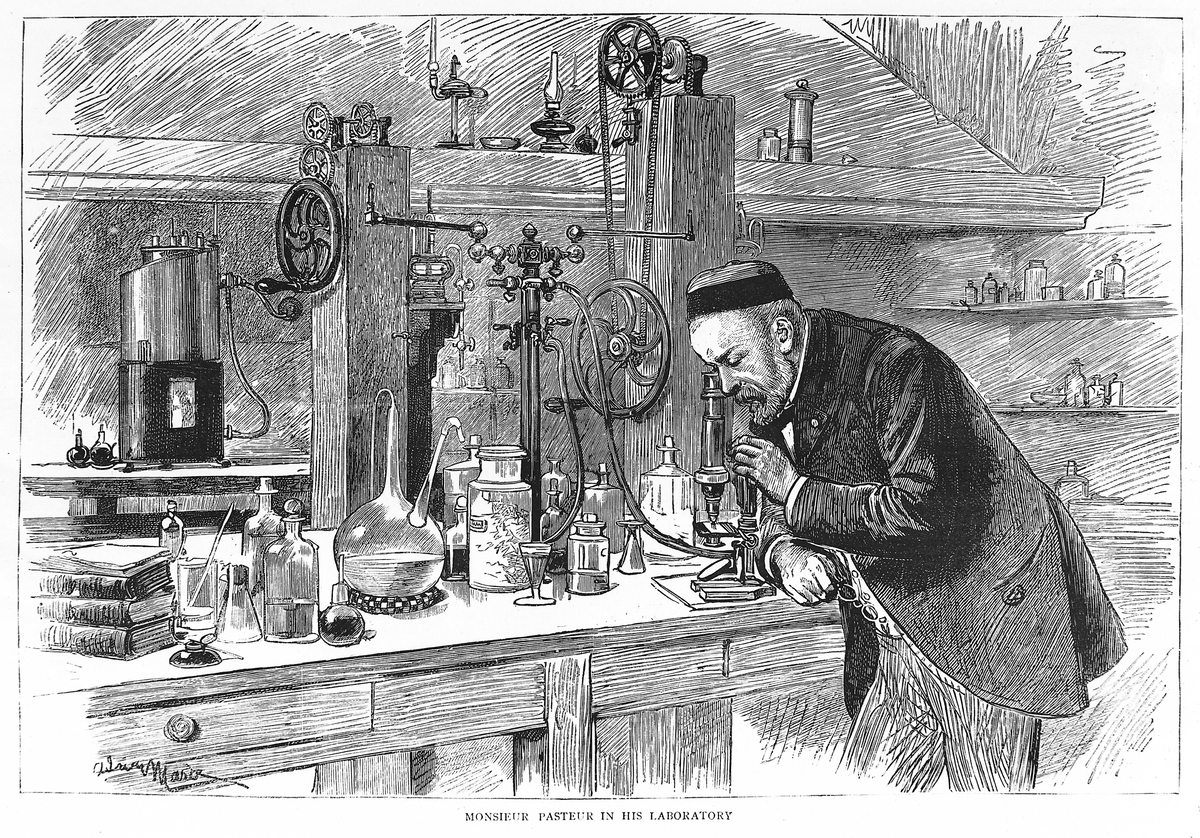
Louis Pasteur confirms fermentation experiments
Paris, France
Science
Microbiology
History of Science
3 min read
Updated By: History Editorial Network (HEN)
Published:
Updated:
Louis Pasteur, a prominent French scientist, played a crucial role in advancing the understanding of fermentation and the role of microorganisms in this process. His confirmation of Theodor Schwann's fermentation experiments provided significant evidence that yeast, previously thought to be simple organisms, were indeed microorganisms responsible for fermentation. This finding was pivotal in shifting the scientific community's perspective on fermentation, which had been largely influenced by the miasma theory that attributed infections to foul odors rather than to specific biological agents. Pasteur's work laid the groundwork for the germ theory of disease, which fundamentally changed the approach to microbiology and medicine.
The implications of Pasteur's research extended beyond fermentation; it also had a profound impact on various industries, including brewing, winemaking, and food preservation. By understanding the role of yeast and other microorganisms, Pasteur was able to develop methods to control fermentation processes, leading to improved quality and safety in food production. His discoveries not only enhanced the efficiency of these industries but also contributed to public health by reducing the incidence of spoilage and contamination. Overall, Pasteur's confirmation of fermentation experiments marked a significant advancement in microbiology, influencing both scientific thought and practical applications in food and health.
#mooflife
#MomentOfLife
#LouisPasteur
#Fermentation
#Microorganisms
#GermTheory
#FoodSafety
Primary Reference
Louis Pasteur

Explore the Life Moments of
 AI Twin