The Historical Dispute Over Land Ownership Resolved by an International Tribunal in 1899
Guyana
International Law
Land Disputes
3 min read
Updated By: History Editorial Network (HEN)
Published:
Updated:
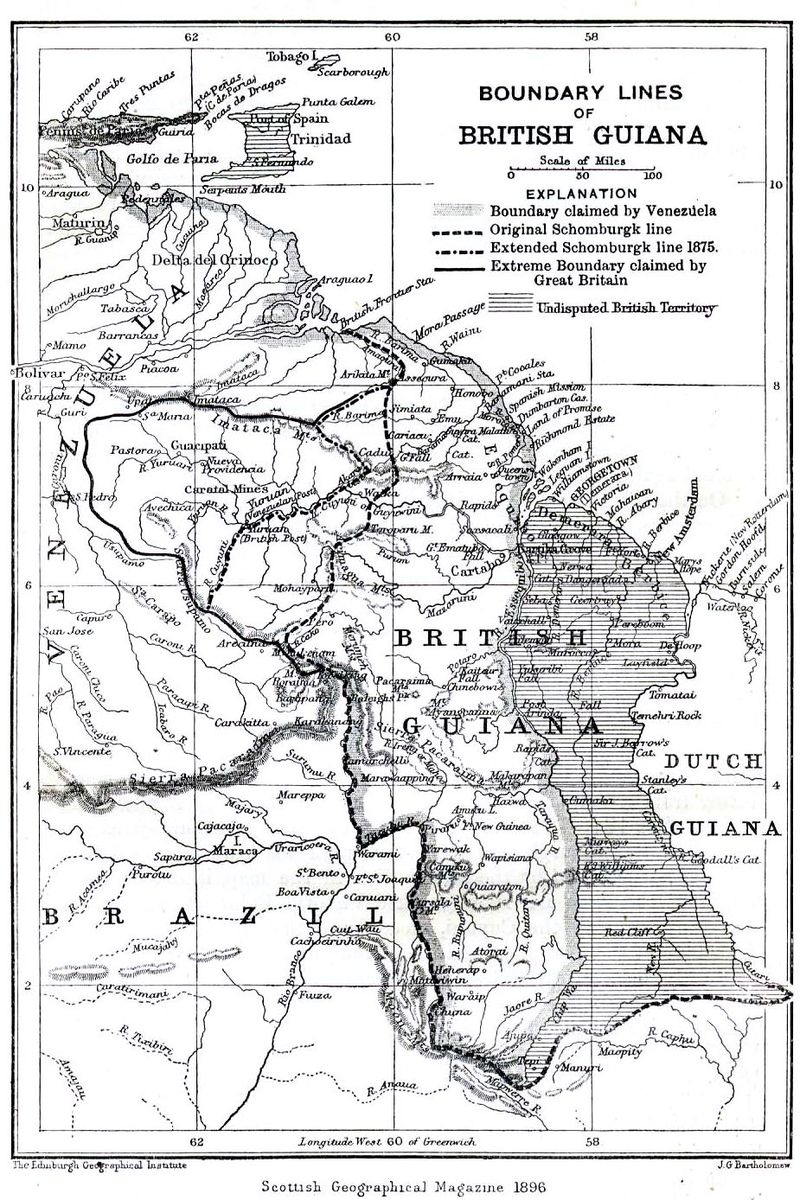
In 1899, an international tribunal made a significant ruling regarding the territorial dispute between Great Britain and Venezuela over the land west of the Essequibo River. This decision came after Venezuela, having gained independence in 1824, asserted its claim to the territory based on historical Spanish claims that date back to the 16th century. The tribunal's ruling ultimately affirmed British control over the disputed area, which was part of British Guiana at the time. This ruling was pivotal as it not only solidified British territorial claims but also set a precedent for international arbitration in territorial disputes. The Essequibo River, a major waterway in the region, became a focal point in the ongoing tensions between the two nations, with Venezuela continuing to contest the ruling in subsequent years. The implications of the tribunal's decision were far-reaching, influencing diplomatic relations in the region and shaping the geopolitical landscape of South America. The Essequibo dispute remains a contentious issue, with Venezuela still asserting its claims over the territory, highlighting the lasting impact of the 1899 ruling on contemporary international relations.
#Mooflife #MomentOfLife #EssequiboRiver #Venezuela #BritishGuiana #InternationalTribunal #TerritorialDispute

Explore the Life Moments of
 AI Twin