Results and Implications of the Elections for the People's Progressive Party
Guyana
Politics
Elections
Analysis
3 min read
Updated By: History Editorial Network (HEN)
Published:
Updated:
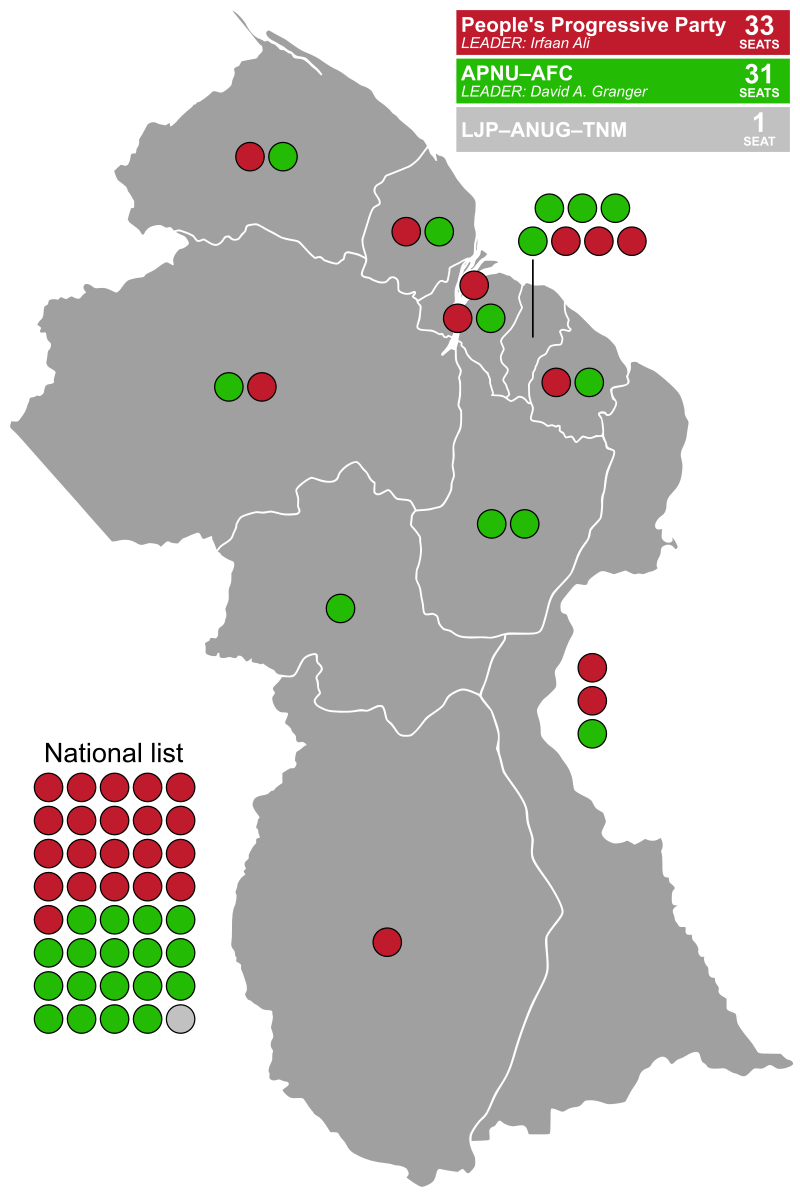
In a significant political event, new elections were held in Guyana on March 2, 2020, following a tumultuous period that included a failed vote of confidence in the government. The vote was triggered by concerns over the terms under which the government granted a franchise for offshore oil exploration. The situation escalated when legislator Charrandass Persaud defected from the governing coalition, leading to a political impasse that necessitated new elections. After a prolonged legal battle that lasted the full 90 days allowed for the election process, the results were finally declared on August 3, 2020. The People's Progressive Party/Civic (PPP/C) emerged victorious, with Mohamed Irfaan Ali being sworn in as the ninth President of Guyana. This election marked a pivotal moment in Guyana's political landscape, which has historically been characterized by ethnic divisions and tensions between the two main political parties: the People's National Congress (PNC) and the PPP/C. The elections were closely watched, given the history of violent riots during previous electoral processes, and the outcome has significant implications for the future governance and resource allocation in the country.
#Mooflife #MomentOfLife #GuyanaElections2020 #MohamedIrfaanAli #People'sProgressiveParty #PoliticalLandscapeGuyana #OffshoreOilExploration

Explore the Life Moments of
 AI Twin