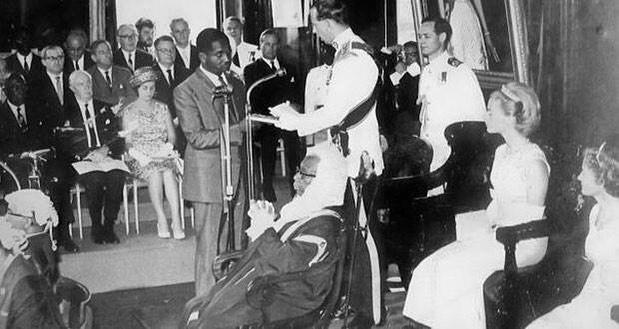
Guyana Achieves Independence from British Colonial Rule
Guyana

Politics
Economics
3 min read
Updated By: History Editorial Network (HEN)
Published:
Updated:
Guyana achieved independence from British colonial rule, marking a significant turning point in its history. This transition to self-governance was spearheaded by Forbes Burnham, who implemented a policy of nationalization aimed at addressing the deep-rooted inequities established during the plantation-based colonial era. The nationalization policy sought to redistribute wealth and resources, particularly in sectors such as agriculture and mining, which had been dominated by foreign interests. This move was crucial in empowering the local population and fostering economic independence. However, the post-independence period was not without challenges. Shortly after gaining independence, Guyana faced diplomatic and military threats from neighboring Venezuela, which claimed parts of Guyanese territory. Despite these challenges, Guyana continued to navigate its path towards nation-building, eventually becoming a republic on February 23, 1970. The legacy of independence and the nationalization policy remains a pivotal aspect of Guyana's socio-economic landscape today, as the country continues to strive for equitable development and national unity.
#Mooflife #MomentOfLife #GuyanaIndependence #ForbesBurnham #Nationalization #BritishColonialRule #VenezuelaRelations

Explore the Life Moments of
 AI Twin