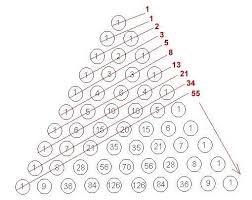
Virahanka's Contributions to Fibonacci Sequence
India
Mathematics
Contributions
4 min read
Updated By: History Editorial Network (HEN)
Published:
Updated:
Virahanka, an ancient Indian mathematician, made notable contributions to the understanding of Fibonacci numbers, which are a sequence of numbers where each number is the sum of the two preceding ones. This sequence is foundational in various fields of mathematics and has applications in computer science, biology, and art. Virahanka's work predates the more widely known introduction of the Fibonacci sequence in Europe, highlighting the rich mathematical heritage of India. His descriptions of these numbers were part of a broader exploration of mathematical concepts, including the development of formulas related to sine and cosine functions. This indicates that Indian mathematicians were engaged in advanced mathematical thinking long before similar ideas gained traction in the West.
The impact of Virahanka's contributions extends beyond the realm of pure mathematics. The Fibonacci sequence is now recognized for its occurrence in natural phenomena, such as the arrangement of leaves on a stem, the branching of trees, and the patterns of various fruits and flowers. Furthermore, the sequence has been utilized in algorithms and computational methods, demonstrating its relevance in modern technology. The acknowledgment of Virahanka's work is crucial for understanding the historical context of mathematical development and the cross-cultural exchanges that have shaped the discipline. His insights into Fibonacci numbers not only enriched Indian mathematics but also laid the groundwork for future explorations in number theory and its applications.
#mooflife
#MomentOfLife
#Virahanka
#FibonacciSequence
#IndianMathematics
#MathematicalHeritage
#NumberTheory

Explore the Life Moments of
 AI Twin