Faxian's Pilgrimage to India
India
Buddhism
Travel
3 min read
Updated By: History Editorial Network (HEN)
Published:
Updated:
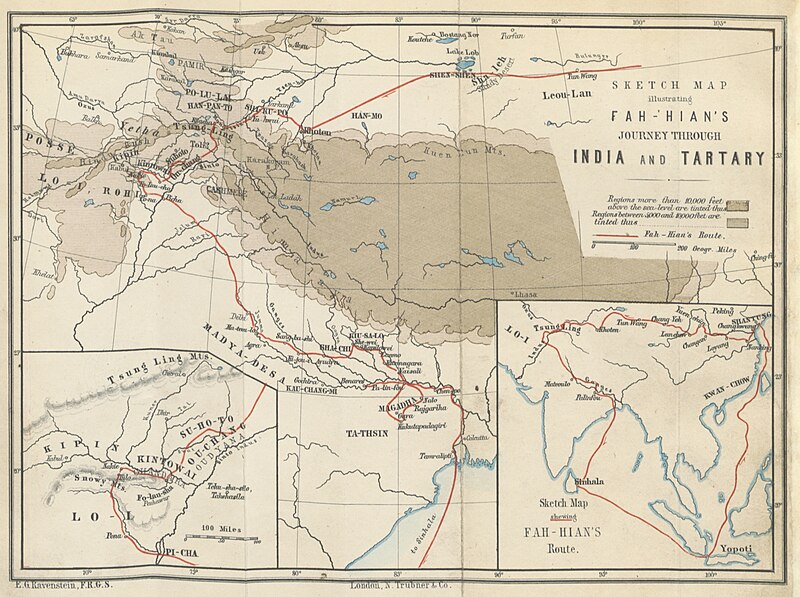
Faxian, a Chinese Buddhist monk, embarked on a pilgrimage to India during the reign of the Gupta emperor Chandragupta II. His journey began in China and he arrived in India after a lengthy travel period. Once in India, Faxian spent several years exploring various significant locations, including Mathura, Kannauj, Kapilavastu, Kushinagar, Vaishali, Pataliputra, Kashi, and Rajagriha. His observations and writings during this period are crucial for understanding the socio-political and religious landscape of the Gupta Empire. Faxian documented the administration, culture, and the flourishing state of Buddhism in India, providing a unique perspective on the era's prosperity and governance. His accounts highlight the interactions between different cultures and the spread of Buddhist teachings, which were pivotal in shaping the religious dynamics of the region. The insights he provided have been instrumental for historians studying the Gupta period, as they reveal the complexities of trade, pilgrimage, and the exchange of ideas between India and China. Furthermore, Faxian's pilgrimage underscored the significance of India as a center of learning and spirituality, attracting scholars and monks from distant lands seeking knowledge and enlightenment. His journey not only contributed to the historical record of the time but also facilitated the cultural exchange that would influence future generations of Buddhists and scholars alike.
#mooflife
#MomentOfLife
#Faxian
#BuddhistPilgrimage
#GuptaEmpire
#IndianHistory
#CulturalExchange

Explore the Life Moments of
 AI Twin