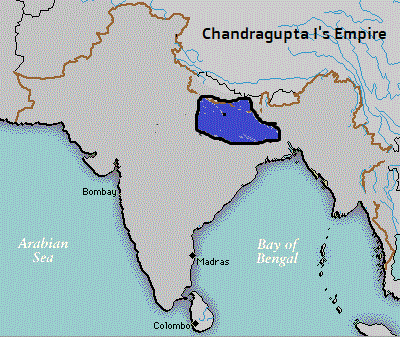
Chandragupta I ascends the throne
India
Historical Figures
Ancient Empires
Indian History
4 min read
Updated By: History Editorial Network (HEN)
Published:
Updated:
Chandragupta I ascended the throne as the founder of the Gupta Empire, establishing a dynasty that would play a crucial role in shaping northern India. His rise to power marked the beginning of a transformative period in Indian history, often referred to as the classical age. This era is noted for its remarkable advancements in various fields, including arts, science, and political administration. The Gupta Empire is recognized for its contributions to literature, mathematics, and astronomy, with scholars and artists flourishing under its patronage. The political structure established during Chandragupta I's reign laid the groundwork for a centralized administration that would enhance trade and cultural exchange across the region.
The impact of Chandragupta I's rule extended beyond immediate governance; it set the stage for subsequent rulers, such as Samudragupta and Chandragupta II, who further expanded the empire and its influence. The Gupta period is often celebrated for its cultural achievements, including the development of classical Sanskrit literature and significant progress in mathematics, such as the concept of zero. The stability and prosperity of the Gupta Empire during this time fostered an environment where intellectual pursuits thrived, leading to innovations that would influence future generations. The legacy of Chandragupta I and the Gupta Empire continues to be a subject of study, reflecting the importance of this period in the broader narrative of Indian history.
#mooflife
#MomentOfLife
#GuptaEmpire
#ChandraguptaI
#IndianHistory
#ClassicalAge
#CulturalAchievements

Explore the Life Moments of
 AI Twin