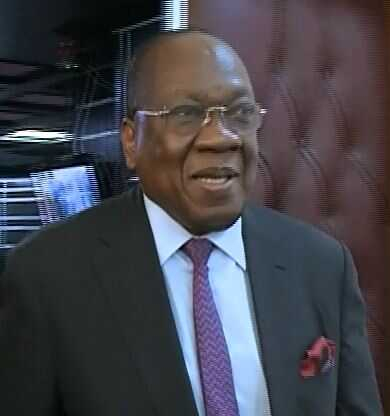
Prime Minister 'François Lonseny Fall' Resigns
Guinea
Political
7 min read
Updated By: History Editorial Network (HEN)
Published:
Updated:
On April 30, 2004, François Lonseny Fall, the Prime Minister of Guinea, resigned and went into exile after just two months in office, citing severe political obstruction by President Lansana Conté. His resignation highlighted the deep-seated challenges of governance in Guinea under Conté’s rule, which had been marked by authoritarianism, economic mismanagement, and suppression of political opposition.
The Background of Fall’s Appointment
Fall was appointed as Prime Minister on February 23, 2004, following Conté’s re-election in December 2003, a highly controversial poll that was boycotted by major opposition parties and accused of widespread fraud. Conté, who had ruled Guinea since a military coup in 1984, won the election with an improbable 95% of the vote. In an attempt to project a reformist image and restore credibility to the government, Conté brought in Fall, a respected former foreign minister and Guinean representative to the United Nations. However, it quickly became evident that the president had no real intention of allowing significant political or economic change.
Fall’s Struggle for Reform
During his short tenure, Fall attempted to:
Renegotiate Guinea’s external debt, which was crippling the already fragile economy.
Open dialogue with the European Union, which had withheld €240 million ($280 million) in aid due to concerns over governance and human rights violations.
Clean up the justice system, which was notorious for corruption and political bias.
Foster dialogue with the opposition, which had been consistently marginalized under Conté.
However, Fall found himself consistently blocked by the president, who vetoed all his initiatives. In his resignation letter, Fall cited "anachronistic practices" and the "continuing lack of dialogue" at multiple levels—within the government, with opposition leaders, and with international donors.
The Immediate Aftermath
Government Silence: Five days after Fall’s resignation, Guinea’s state-run media had not acknowledged his departure. Government officials also refused to comment, reflecting the rigid control of information by the regime.
Safety Concerns: Fall submitted his resignation while attending a River Niger Basin Authority meeting in Paris, fearing for his safety if he had done so in Conakry. He later told Radio France Internationale (RFI) that if he had resigned while still in Guinea, his life would have been in danger.
Political Tensions Escalate: Fall expressed particular frustration over the government's harassment of Sidya Touré, a former prime minister (1996–1999) and a major opposition figure, who was accused of plotting against Conté and was banned from leaving Conakry.
Broader Implications
Fall’s resignation underscored the dysfunctionality of Guinea’s political system and the growing instability under Conté, who was increasingly seen as physically unfit to rule due to diabetes and heart disease. His declining health and unwillingness to share power raised concerns about Guinea’s future.
Diplomatic sources suggested that if Conté’s rule ended suddenly—either due to his health or a military intervention—it could open the door for figures like Sidya Touré to lead Guinea toward genuine democracy. However, at the time of Fall’s resignation, the political landscape remained highly repressive and uncertain.
#GuineaPolitics #FrançoisFall #LansanaConté #PoliticalReform #MomentsOfLife #MoofLife_Moment #MoofLife
Primary Reference
Prime Minister quits after two months during visit to Paris
Explore the Life Moments of
 AI Twin