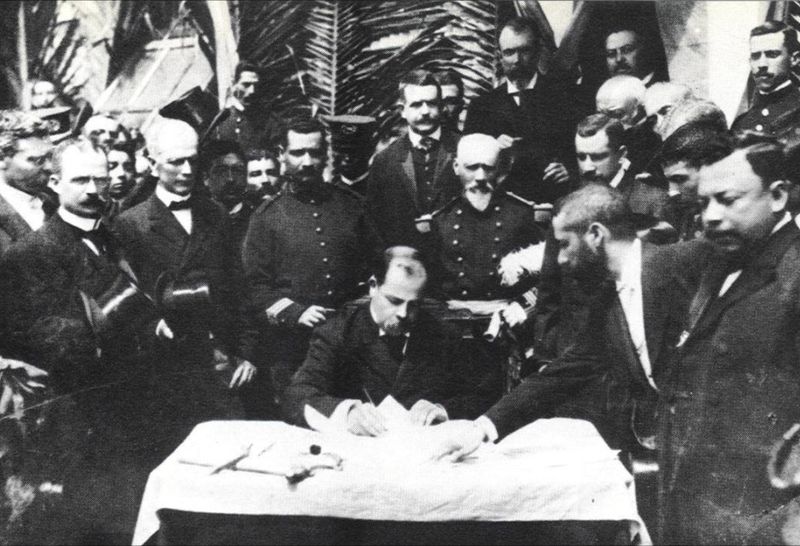
Manuel Estrada Cabrera Assumes Office
Guatemala
Politics
Latin American Studies
3 min read
Updated By: History Editorial Network (HEN)
Published:
Updated:
Manuel Estrada Cabrera served as the President of Guatemala from 1898 to 1920, marking a significant period in the nation's history as he was the first civilian head of state in over 50 years. After overcoming initial resistance to his regime by August 1898, Cabrera called for elections in September, which he won decisively. His administration is often remembered for its controversial relationship with the United Fruit Company (UFCO), which he allowed to enter the Guatemalan economic and political landscape.
In 1904, Cabrera signed a contract with UFCO's Minor Cooper Keith, granting the company tax exemptions, land grants, and control over all railroads on the Atlantic side of the country. This move was aimed at fostering the development of Guatemala's infrastructure, including highways, railroads, and sea ports, to boost the export economy. However, Cabrera's rule was not without challenges; he faced serious revolts in 1906 and survived an assassination attempt in 1907. Over time, his regime became increasingly despotic, leading to a complex legacy that intertwines economic development with political repression.
#Mooflife #MomentOfLife #ManuelEstradaCabrera #GuatemalaHistory #UnitedFruitCompany #PoliticalLegacy #InfrastructureDevelopment

Explore the Life Moments of
 AI Twin