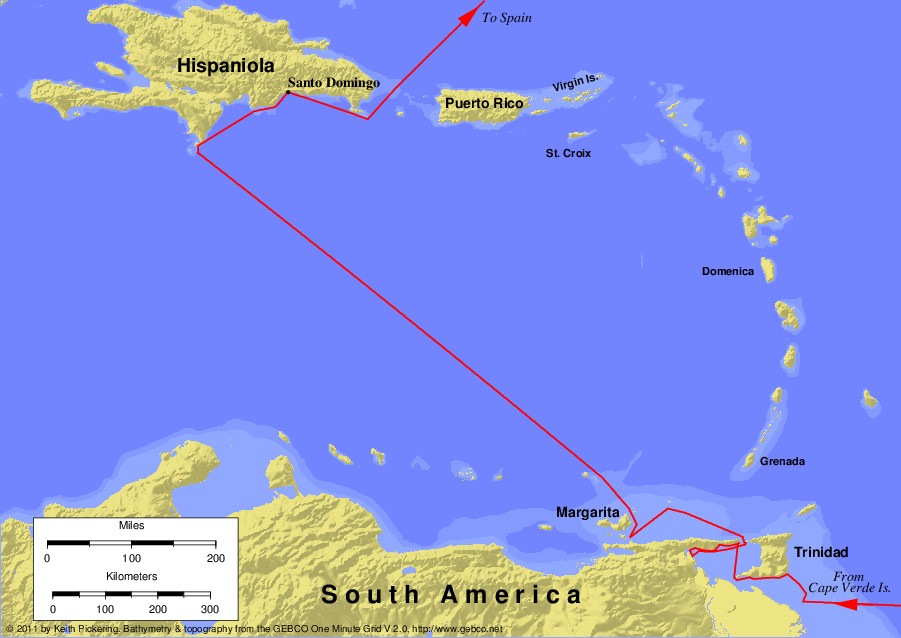
Christopher Columbus's Third Voyage: Discovery of Grenada in the Age of Exploration.
Grenada
Exploration
3 min read
Updated By: History Editorial Network (HEN)
Published:
Updated:
Christopher Columbus embarked on his third voyage to the New World, aiming to explore uncharted territories. On this journey, he encountered the island now known as Grenada. The sighting of Grenada marked an expansion of the geographical knowledge for European explorers. Historical accounts suggest that the island was already inhabited by the Carib people, a group indigenous to the region.
The discovery had significant implications for the indigenous populations and for European empires. The Caribs, who were skilled navigators, had established a presence in the region long before Columbus's arrival. The encounter between these divergent cultures triggered a series of events that led to the European colonization of the Caribbean. Subsequent European interests in Grenada were driven by the island's strategic position and natural resources.
This sighting contributed to the broader Age of Discovery, a period characterized by extensive overseas exploration by European powers. It further solidified Columbus's role in expanding European influence across the Atlantic, although the voyages also prefigured the later exploitation and drastic changes for the indigenous communities.
#ChristopherColumbus #GrenadaSighting #AgeOfDiscovery #CaribPeople #MoofLife

Explore the Life Moments of
 AI Twin