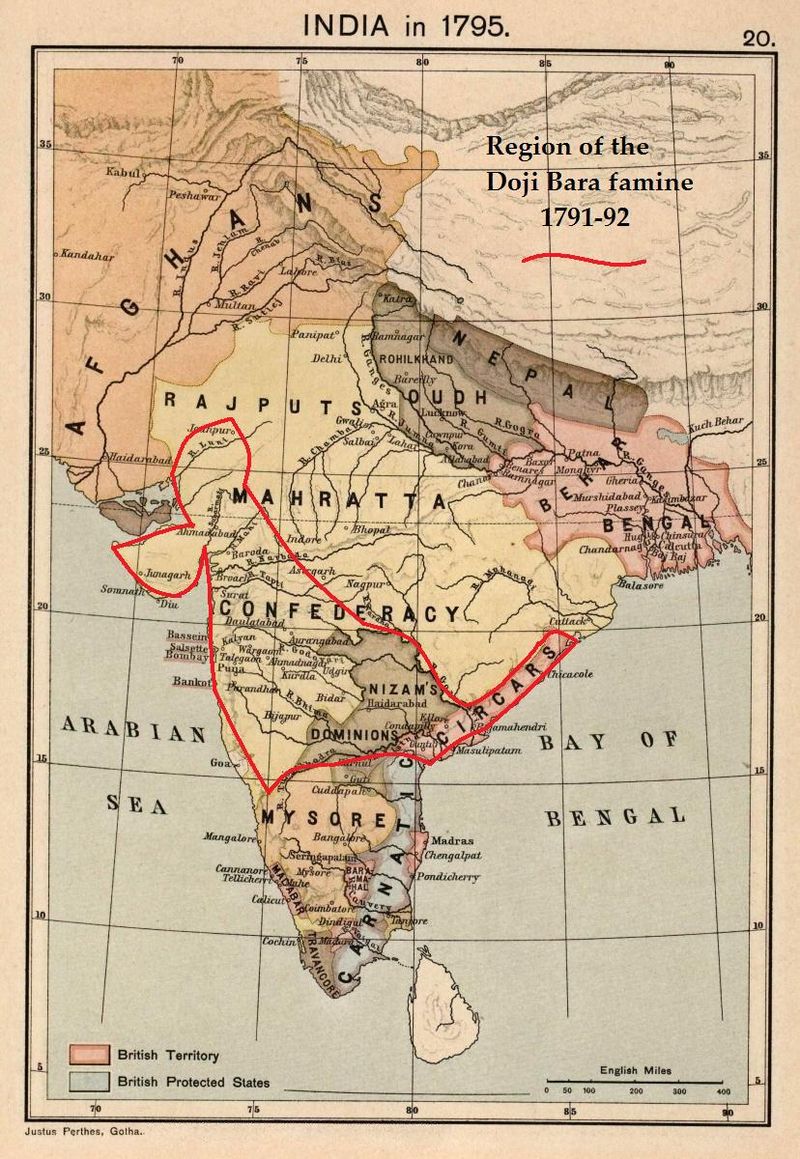
Doji bara famine in 1789
Historical Events
Famine Studies
Indian History
4 min read
Updated By: History Editorial Network (HEN)
Published:
Updated:
The Doji bara famine, commonly referred to as the Skull famine, occurred in India during a period marked by severe food shortages and widespread suffering. This famine is notable for its devastating impact on the population, with estimates of the death toll ranging significantly. The famine was primarily caused by a combination of factors including drought, crop failure, and the socio-political conditions of the time. The agrarian economy was heavily reliant on monsoon rains, and when these failed, the resulting scarcity of food led to widespread hunger and malnutrition. The famine affected various regions, exacerbating the plight of the rural population who were already vulnerable due to economic instability and oppressive taxation policies. Reports from the time indicate that the famine led to mass migrations as people sought food and better living conditions, further straining resources in less affected areas.
The impact of the Doji bara famine was profound, with long-lasting effects on the demographic and social fabric of the regions affected. Historical accounts suggest that the famine resulted in a significant decline in population, with millions succumbing to starvation and related diseases. The famine also highlighted the inadequacies of the existing administrative structures in managing food security and responding to agricultural crises. In the aftermath, there were calls for reforms in agricultural practices and governance to prevent such tragedies from recurring. The Doji bara famine serves as a stark reminder of the vulnerabilities faced by agrarian societies and the critical importance of sustainable agricultural practices and effective governance in ensuring food security.
#mooflife
#MomentOfLife
#DojiBaraFamine
#SkullFamine
#IndiaFamineHistory
#FoodScarcity
#AgriculturalCrisis

Explore the Life Moments of
 AI Twin