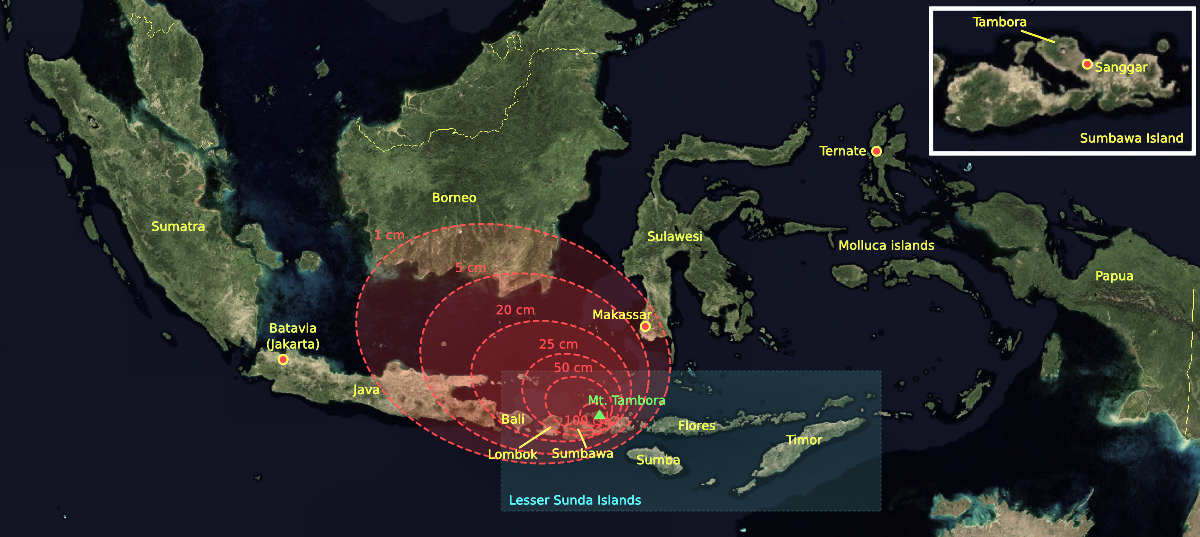
1815 eruption of Mount Tambora
Natural Disasters
Volcanology
Climate Change
2 min read
Updated By: History Editorial Network (HEN)
Published:
Updated:
The eruption of Mount Tambora in Indonesia is recognized as one of the most powerful volcanic events in recorded history. This eruption resulted in a death toll exceeding 71,000, primarily due to the immediate effects of the eruption and the subsequent climatic changes it triggered. The volcanic activity released an enormous volume of ash and sulfur dioxide into the atmosphere, which led to a significant drop in global temperatures. This phenomenon caused what is known as the Year Without a Summer, characterized by severe weather anomalies, including unseasonably cold temperatures and widespread crop failures across the Northern Hemisphere. The agricultural impacts were profound, leading to food shortages and famine in various regions, particularly in Europe and North America. Historical records indicate that the summer of the following year was marked by frost and snow in places where such weather was unusual, severely affecting harvests and livelihoods.
#mooflife
#MomentOfLife
#MountTambora
#VolcanicEruption
#ClimateChange
#YearWithoutASummer
#NaturalDisasters

Explore the Life Moments of
 AI Twin