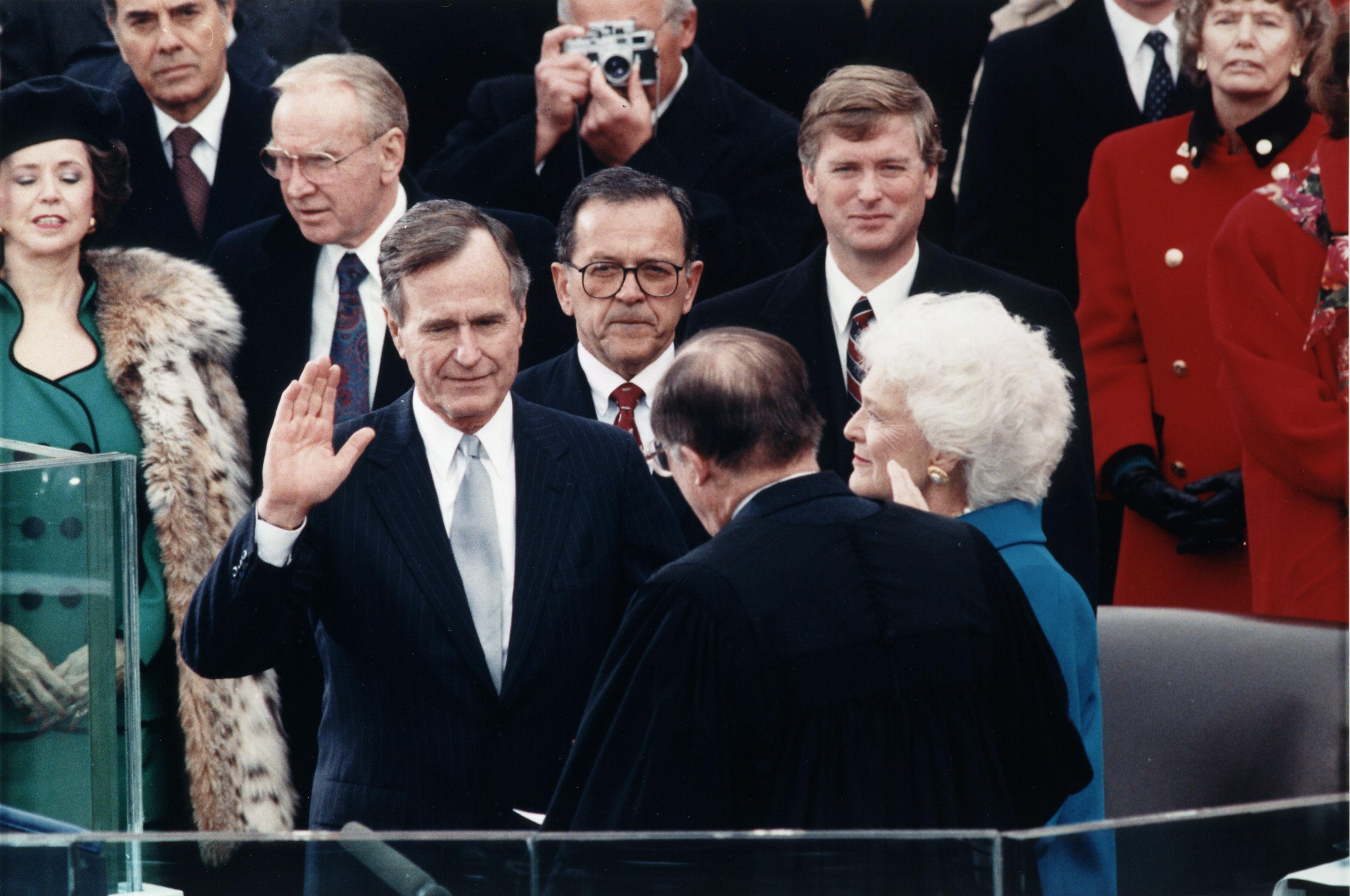
Bush takes the oath of office
Economic Policy
Taxation
Government Spending
4 min read
Updated By: History Editorial Network (HEN)
Published:
Bush took the oath of office during a period marked by economic challenges, particularly following the dot-com bubble burst. His administration's economic policies led to a significant increase in federal government spending, which rose from $1.789 trillion to $2.983 trillion, a 66 percent increase. In contrast, revenues increased from $2.025 trillion to $2.524 trillion. Notably, individual income tax revenues grew by 14 percent, corporate tax revenues by 50 percent, and customs and duties by 40 percent. The administration also saw substantial increases in discretionary spending, with defense spending rising by 107 percent and Medicare spending by 131 percent. Despite a projected $5.6 trillion surplus over the next decade, the reality shifted as the national debt grew to $11.3 trillion by the end of his presidency, largely due to tax cuts and increased security spending.
The economic landscape during Bush's presidency was further complicated by the September 11 terrorist attacks, which had a profound impact on the economy. Initially, unemployment rose from 4.2 percent to 6.3 percent, before dropping to 4.5 percent later in his term. However, median household income adjusted for inflation fell by $1,175, and the poverty rate increased from 11.3 percent to 12.3 percent. The Dow Jones Industrial Average, which started at 10,587, peaked at over 14,000 before Bush left office at a low of 7,949. This decline in the stock market was a notable aspect of his presidency, as only four other presidents left office with a lower market average than when they began. The economic growth rate during his tenure averaged 2.125 percent, which was below historical averages, indicating a sluggish recovery despite the tax cuts and spending increases.
#mooflife
#MomentOfLife
#BushPresidency
#EconomicPolicy
#FederalSpending
#TaxCuts
#NationalDebt
Explore the Life Moments of
 AI Twin