Homophobic epithets in Keep the Aspidistra Flying
Literature
Social Critique
Gender Studies
3 min read
Updated By: History Editorial Network (HEN)
Published:
Updated:
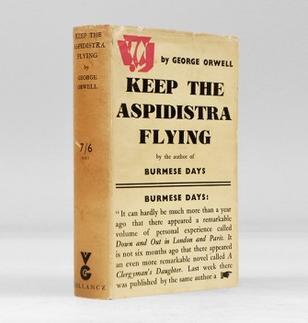
In George Orwell's novel 'Keep the Aspidistra Flying', the protagonist Gordon Comstock engages in a critical examination of his customers while working in a bookshop. This internal critique reveals Comstock's disdain for certain individuals, particularly a homosexual male customer. The narrative includes a detailed passage where Comstock expresses contempt for the customer, using homophobic epithets such as 'nancy' and 'pansy'. These terms reflect not only his personal biases but also a broader societal attitude towards homosexuality during the time. The character's sneering remarks, including references to the customer's lisp, highlight the stigmatization faced by homosexuals and the internalized homophobia that can arise from societal pressures. Stephen Spender, a contemporary of Orwell, suggested that these outbursts may have stemmed from Orwell's own experiences in the public school system, where such attitudes were prevalent. This aspect of the novel serves as a critical lens through which to examine the intersections of class, sexuality, and identity in early 20th-century Britain, illustrating how personal insecurities can manifest in derogatory language towards marginalized groups. The use of homophobic language in the text not only reflects Comstock's character but also serves as a commentary on the cultural climate of the time, revealing the complexities of social interactions and the impact of societal norms on individual behavior.
#mooflife
#MomentOfLife
#GeorgeOrwell
#KeepTheAspidistraFlying
#Homophobia
#LiteraryAnalysis
#20thCenturyLiterature
Primary Reference
Keep the Aspidistra Flying
Explore the Life Moments of
 AI Twin