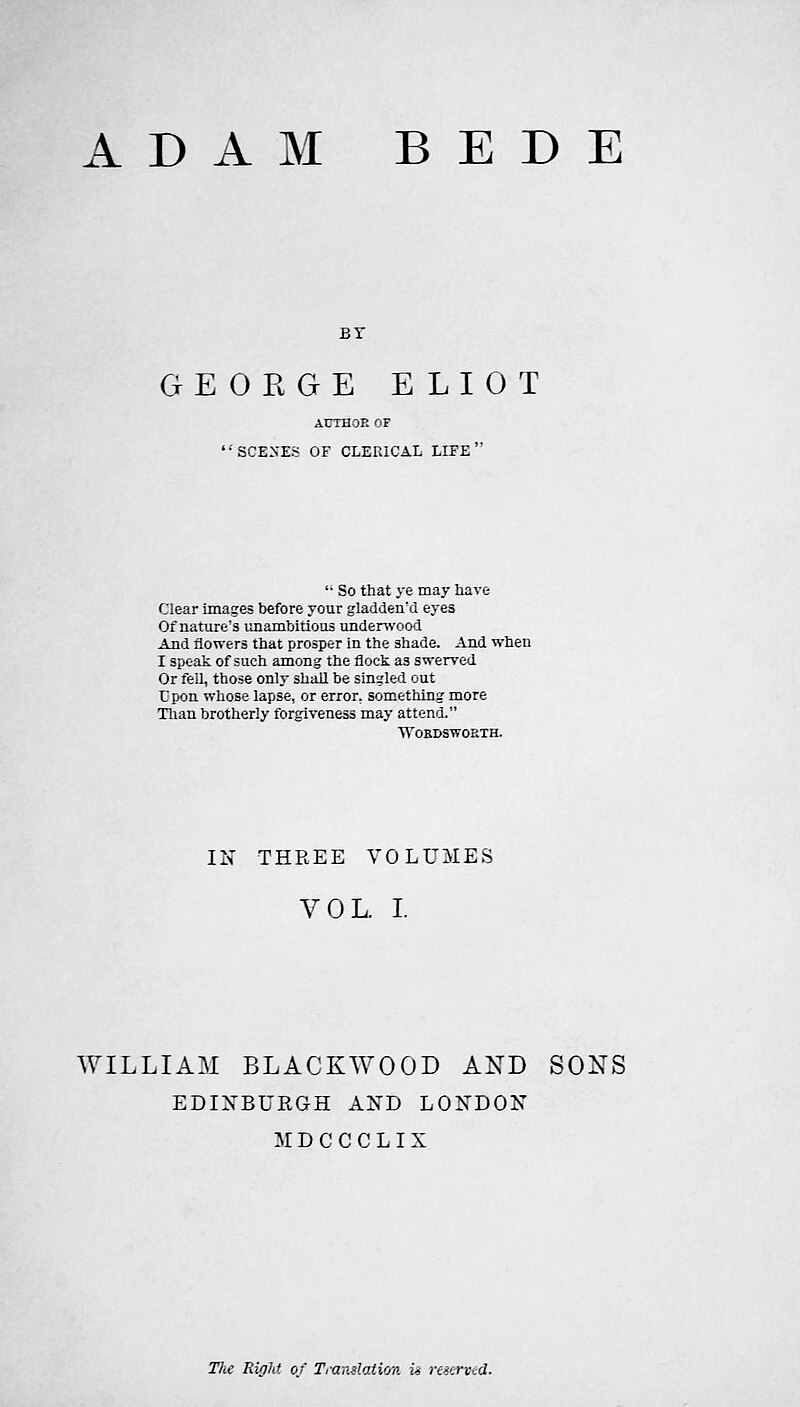
Publishing of Adam Bede
England
Literature
Novels
Classic
4 min read
Updated By: History Editorial Network (HEN)
Published:
Updated:
George Eliot, the pen name of Mary Anne Evans Lewes, made a notable entrance into the literary world with the publication of her first complete novel, Adam Bede. This work quickly gained popularity, capturing the attention of readers and critics alike. The novel is recognized for its realist aesthetic, drawing inspiration from Dutch visual art, which contributed to its depth and authenticity. The immediate success of Adam Bede sparked widespread curiosity regarding the identity of its author, leading to various speculations, including a false claim by an individual named Joseph Liggins. This public intrigue ultimately prompted Evans to reveal her identity as George Eliot, marking a pivotal moment in her literary career and in the broader context of women's authorship during that period. Eliot's decision to publish under a male pseudonym was a strategic choice, reflecting the societal constraints on women writers at the time and the desire for her work to be taken seriously in a male-dominated literary landscape.
The impact of Adam Bede extended beyond its initial success, as it set the stage for Eliot's subsequent novels, which would further explore complex themes of morality, society, and human relationships. Eliot's works, characterized by their psychological insight and social commentary, contributed significantly to the development of the English novel. Her ability to weave intricate narratives that reflect the realities of life resonated with readers and established her as a leading figure in Victorian literature. The legacy of George Eliot continues to influence contemporary literature, as her exploration of character and society remains relevant in discussions of gender, identity, and the human experience.
#mooflife
#MomentOfLife
#GeorgeEliot
#AdamBede
#VictorianLiterature
#WomenAuthors
#RealismInLiterature
Primary Reference
Adam Bede

Explore the Life Moments of
 AI Twin