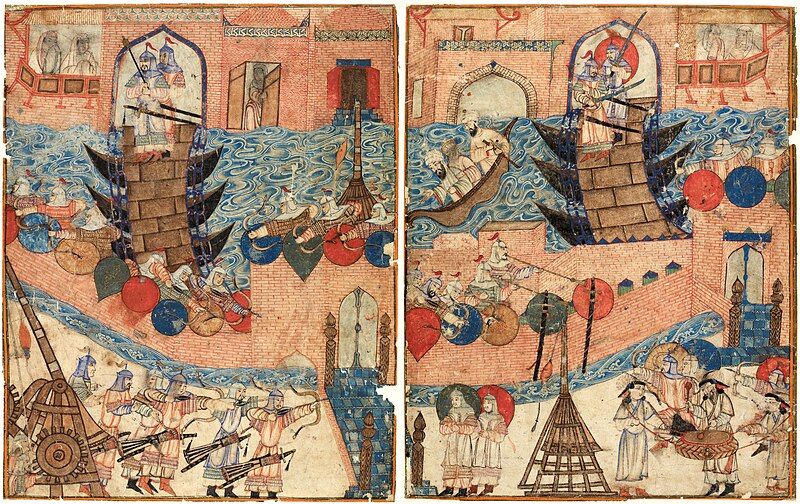
Siege of Baghdad by Hulegu Khan
Mongolia
Historical Events
Mongol Empire
Middle Eastern History
4 min read
Updated By: History Editorial Network (HEN)
Published:
Updated:
The Siege of Baghdad, led by Hulegu Khan, marked a pivotal event in the history of the Middle East and the Islamic world. Hulegu, a grandson of Genghis Khan, orchestrated this military campaign as part of the Mongol Empire's expansion. The siege targeted Baghdad, which was then a prominent center of culture, learning, and power in the Islamic world. The Mongol forces besieged the city, employing a combination of military strategy and psychological warfare. The siege resulted in the city's fall, leading to widespread destruction and loss of life. Historical accounts suggest that the Mongols killed a significant portion of the population and destroyed numerous libraries and institutions, effectively dismantling the intellectual and cultural fabric of the city. This event is often viewed as a turning point that contributed to the decline of the Islamic Golden Age, as Baghdad was a hub of knowledge and scholarship at the time.
The impact of the siege extended beyond immediate destruction. It symbolized the end of the Abbasid Caliphate's political power and the beginning of a new era of Mongol dominance in the region. The fall of Baghdad had profound implications for the Islamic world, leading to a shift in power dynamics and the eventual fragmentation of the Islamic empire. The siege is remembered in the modern Arab world as a catastrophic event that represented the culmination of a broader pattern of violence initiated by Genghis Khan's conquests. The legacy of the siege continues to influence perceptions of Mongol invasions, highlighting the long-lasting effects of military campaigns on cultural and civilizational development.
#mooflife
#MomentOfLife
#HuleguKhan
#SiegeOfBaghdad
#MongolEmpire
#IslamicHistory
#AbbasidCaliphate

Explore the Life Moments of
 AI Twin