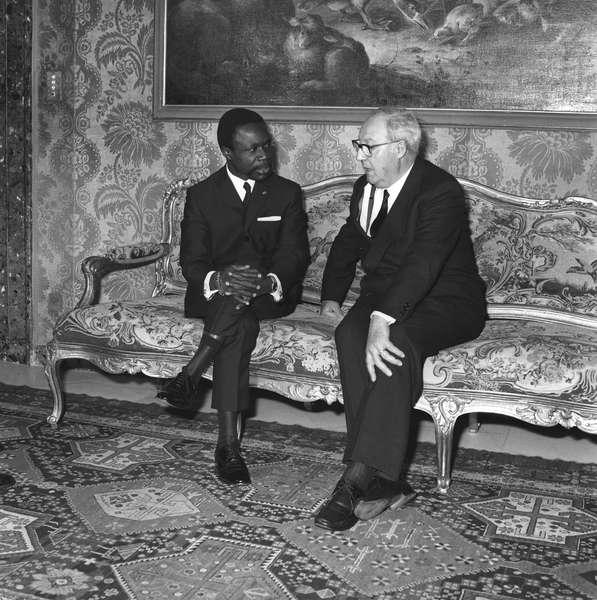
Omar Bongo Ondimba ascended to the presidency of Gabon
Gabon
Politics
African Studies
3 min read
Updated By: History Editorial Network (HEN)
Published:
Updated:
In 1967, following the death of President Léon M'Ba, Omar Bongo Ondimba ascended to the presidency of Gabon, marking a significant turning point in the nation's political landscape. Bongo's leadership began a new era characterized by efforts to unify the country and stabilize its governance. He implemented development policies aimed at addressing regional and tribal rivalries that had historically fragmented Gabonese politics. Bongo's administration focused on economic growth and national cohesion, utilizing the Parti Démocratique Gabonais (PDG) as a strategic tool to foster unity among diverse groups. His presidency was solidified in February 1975 when he was elected, and he further restructured the government by abolishing the vice presidency and introducing the role of prime minister. This change was pivotal as it altered the succession dynamics within the government. Bongo's leadership was reaffirmed through re-elections in December 1979 and November 1986, where he secured seven-year terms, demonstrating his enduring influence in Gabonese politics. His tenure is often noted for its focus on national development and the establishment of a more centralized political framework, which aimed to mitigate the divisions that had plagued the country in the past. #mooflife #mof #MomentOfLife #OmarBongo #GabonPolitics #LéonM'ba #Pdg #GaboneseDevelopment
Primary Reference
Omar Bongo

Explore the Life Moments of
 AI Twin