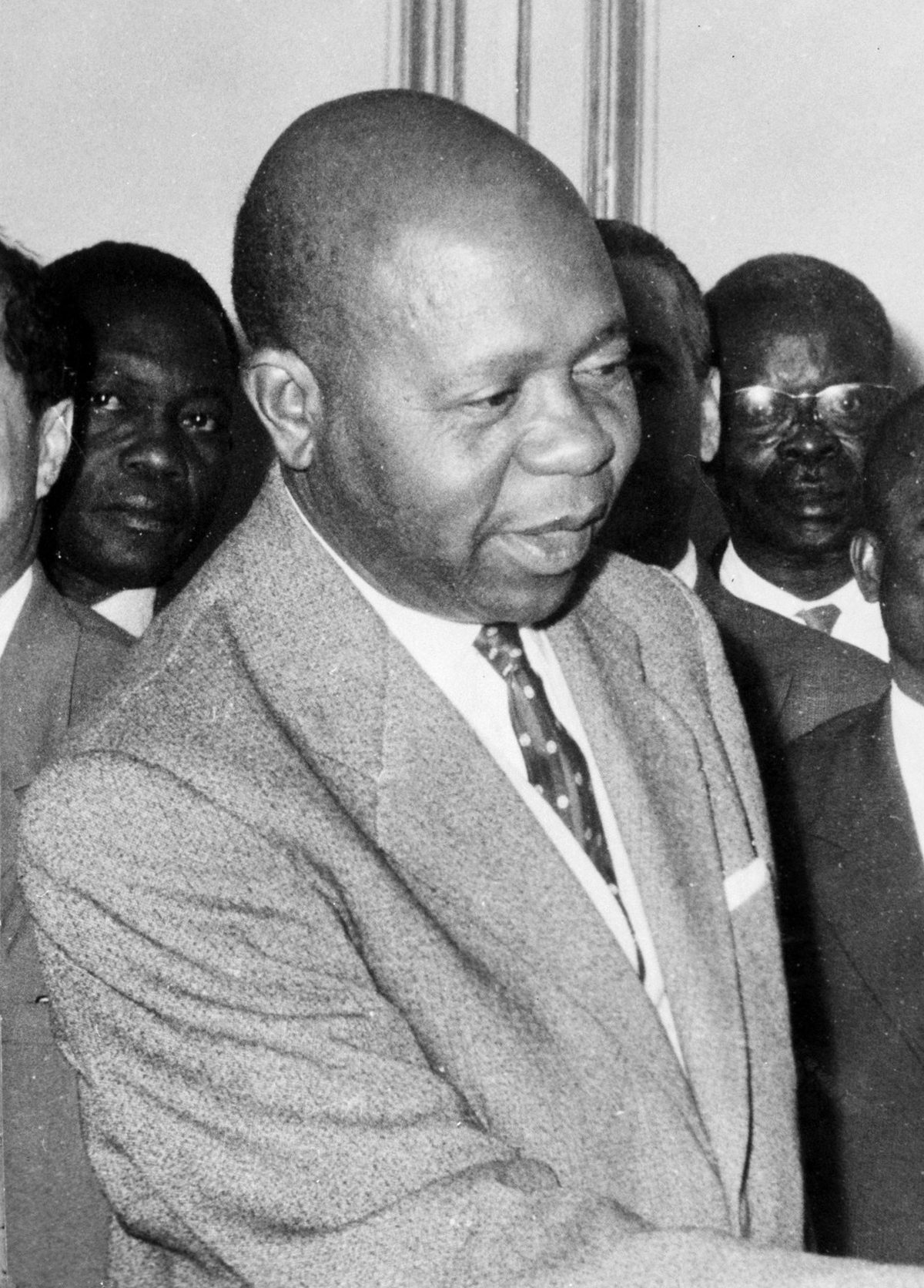
1964 Gabonese coup d'état
Libreville and Lambaréné, Gabon

Politics
Gabon
10 min read
Updated By: History Editorial Network (HEN)
Published:
Updated:
The 1964 Gabon coup d'état exposed the depth of French political and military influence in post-colonial Central Africa, becoming one of the clearest early examples of the system later described as Françafrique. Between 17/02/1964 and 20/02/1964, Gabon’s first president, Léon M'ba, was briefly overthrown by Gabonese military officers before French troops intervened to restore him to power in Libreville.
The political crisis began in January 1964 when President Léon M'ba dissolved the National Assembly and moved toward consolidating a one-party political system under the Bloc Démocratique Gabonais (BDG). Opposition figures, including Jean-Hilaire Aubame, accused M'ba of undermining parliamentary democracy. In the early hours of 18/02/1964, a group of Gabonese army officers arrested M'ba, detained senior government officials, and announced the formation of a provisional government. Aubame, a prominent opposition leader and former foreign minister, was presented as the civilian head of the new administration, although evidence suggests he was not directly involved in organizing the military takeover.
France reacted almost immediately. President Charles de Gaulle and his African affairs adviser Jacques Foccart decided to restore M'ba under the terms of a 1960 defense agreement between France and Gabon. French officials argued that the intervention defended a legitimate constitutional government, while critics later cited the operation as evidence of France protecting its strategic and economic interests in former colonies, including petroleum operations connected to the French oil company Elf.
French paratroopers stationed in Dakar and Brazzaville were mobilized within hours. On 18/02/1964, French troops landed at Libreville International Airport and rapidly secured key government buildings. Around 600 French soldiers participated in the intervention. Fighting was concentrated around the Baraka military camp and other rebel positions. French aircraft and ground forces attacked insurgent units, and by 19/02/1964 the coup had effectively collapsed. Léon M'ba was rescued and reinstated as president. Official casualty figures reported one French soldier and approximately 18 to 19 Gabonese combatants killed, although unofficial estimates suggested higher numbers and additional civilian casualties during unrest in Libreville.
Following the failed coup, M'ba strengthened his authority and cracked down on opposition figures. Jean-Hilaire Aubame and other political opponents were arrested and later sentenced to prison terms. French military intervention in Gabon became an enduring symbol of Paris maintaining influence over former African colonies through defense treaties, political alliances, and rapid military deployments. Historians and political analysts frequently reference the 1964 operation when discussing the Françafrique system that shaped relations between France and several African governments during the Cold War period.
After Léon M'ba’s death in 1967, Vice President Omar Bongo succeeded him and remained in power for more than four decades. The Bongo family continued governing Gabon until the 2023 military coup that removed Ali Bongo Ondimba, extending a political dynasty closely associated with France for nearly six decades.
Why This Moment Matters:
The 1964 intervention demonstrated how newly independent African states could remain politically dependent on former colonial powers despite formal sovereignty. Gabon became one of the most cited examples of France’s willingness during the Cold War era to use military force to preserve allied governments and strategic influence in Africa.
Summary: In January 1964, President Léon M'ba of Gabon made a significant political move by dissolving the National Assembly, effectively instituting a one-party rule in the country. This decision was met with considerable opposition, leading to an army coup that aimed to oust M'ba and restore parliamentary democracy. The coup, however, was short-lived. Within 24 hours, French paratroopers were deployed to Gabon, successfully restoring M'ba to power. The aftermath of the coup was marked by intense fighting and civil unrest, as the opposition was swiftly imprisoned, leading to widespread protests and riots across the nation. This period highlighted the complexities of Gabon's political landscape and the influence of foreign powers in its governance. M'ba's actions and the subsequent coup underscored the tensions between authoritarian rule and the push for democratic governance in post-colonial Africa.
#Françafrique
#FrenchIntervention
#1964Coup
#AfricaHistory
#CharlesDeGaulle
#OmarBongo
#Libreville
Primary Reference
Léon M’ba (1902-1967) - Author: David Zuber

Explore the Life Moments of
 AI Twin