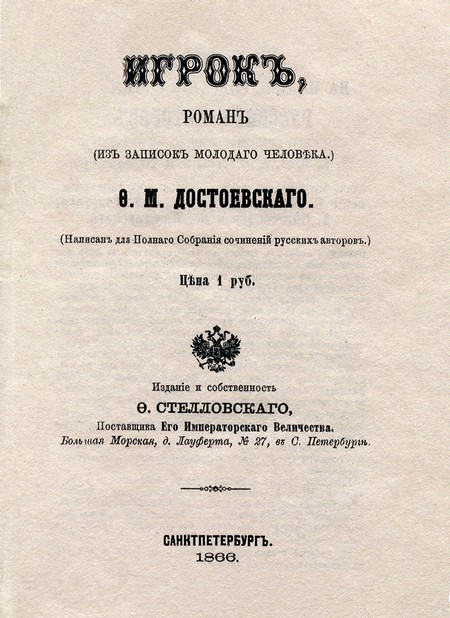
Fyodor Dostoevsky's 'The Gambler': A Self-Published Masterpiece of Addiction and Financial Turmoil.
Russia

Literature
Biography
4 min read
Updated By: History Editorial Network (HEN)
Published:
Fyodor Dostoevsky, a key figure in Russian literature, self-published his novella 'The Gambler.' This work emerged from a period of personal and financial turmoil. Contractually obligated to deliver a novel in a short span of time, Dostoevsky faced mounting debts and the prospect of forfeiting rights to his existing works. His circumstances pushed him to employ a stenographer, Anna Snitkina, who would later become his wife, to expedite the writing process.
'The Gambler' draws heavily from Dostoevsky's own experiences with gambling addiction, a recurring issue that plagued his life and finances. The novella delves into the psychology of a compulsive gambler, offering insights into the destructive nature of the vice. This theme resonated profoundly with readers and critics alike, providing a raw depiction of addiction and its impacts.
The self-publication of 'The Gambler' marked a crucial point in Dostoevsky's career, allowing him to maintain creative control and preserve the profits. This move helped alleviate some of his financial pressures, though it did not entirely free him from debt. The reception of 'The Gambler' was largely positive, reinforcing Dostoevsky's reputation as a master storyteller who could eloquently convey the complexities of the human condition.
Although 'The Gambler' is not considered one of Dostoevsky's major works like 'Crime and Punishment' or 'The Brothers Karamazov,' it nonetheless contributes significantly to understanding the breadth of his literary prowess and thematic concerns. The novella stands as a testament to his resilience and determination in the face of adversity.
#Dostoevsky #TheGambler #RussianLiterature #SelfPublication #LiteraryImpact #ChroniclingAddiction #MoofLife
Explore the Life Moments of
 AI Twin