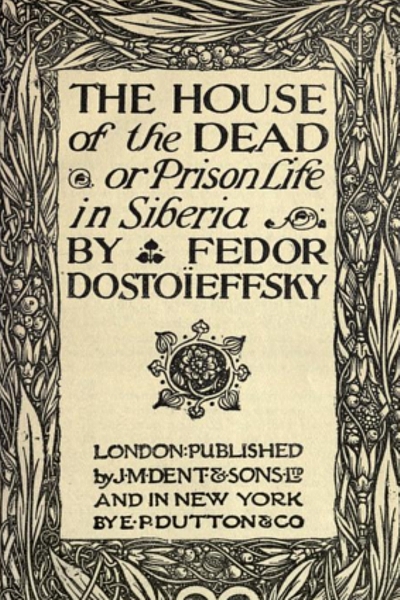
Dostoevsky's 'The House of the Dead': Impactful portrayal of prison life in Siberia.
Russia

Literary
Political
3 min read
Updated By: History Editorial Network (HEN)
Published:
Fyodor Dostoevsky’s novel, 'The House of the Dead,' debuted in the literary journal Vremya. Prior to its publication, Dostoevsky had been imprisoned in a Siberian labor camp for his involvement in political activities against the Tsarist government. His experiences during this time provided a first-hand account that became the backbone of the novel, which depicted the harsh conditions and the psychological impact on convicts.
The novel offered a detailed portrayal of life within the penal system, shedding light on the brutal realities faced by prisoners. This work was significant for Russian literature, presenting a social critique that resonated with contemporary readers who were largely unaware of the Siberian camps' inner workings.
Vremya, a journal run by Dostoevsky and his brother Mikhail, provided a platform for the dissemination of this groundbreaking literary work. The publication helped Dostoevsky reestablish his career following his return from exile.
In terms of impact, 'The House of the Dead' was received with both critical acclaim and public interest. It marked a turning point in Dostoevsky’s writing style, steering towards existentialist themes and showcasing his deepening engagement with the human condition.
#RussianLiterature #PenalReform #LiteraryImpact #Dostoevsky #MoofLife
Explore the Life Moments of
 AI Twin