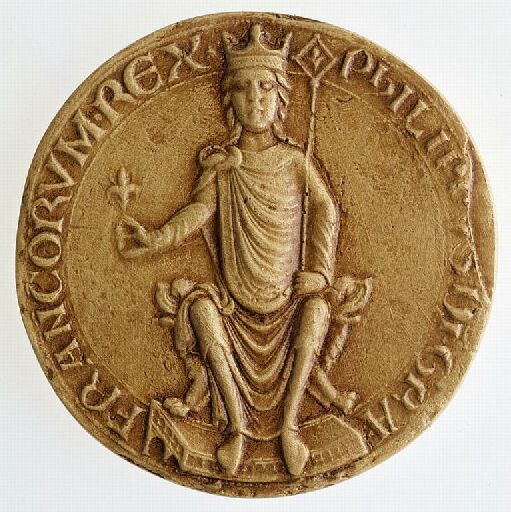
Philip II of Navarre's Legacy and Death
France
4 min read
Updated By: History Editorial Network (HEN)
Published:
Updated:
Philip II , also known as Philip Augustus, played a crucial role in shaping the medieval landscape of France. His reign marked a significant transition in the power dynamics of the region, as he was the first monarch to officially adopt the title 'King of France'. This title signified a shift from the earlier notion of a king ruling over a collection of territories to a more centralized authority over a unified kingdom. Philip II's leadership was characterized by his strategic military campaigns, particularly against the English and the expansion of French territories. His efforts in the Third Crusade and the subsequent battles against King John of England were pivotal in establishing French dominance in the region. Under his rule, the French monarchy strengthened its influence, laying the groundwork for future expansion and consolidation of power.
The impact of Philip II's reign extended beyond military conquests. He implemented administrative reforms that improved governance and increased the efficiency of the royal court. His focus on enhancing the infrastructure of France, including the development of roads and fortifications, contributed to the economic stability of the kingdom. Philip II's legacy is also evident in the cultural advancements during his reign, as he patronized the arts and supported the construction of significant architectural projects, including the Sainte-Chapelle in Paris. His death at the age of 57 marked the end of a transformative era for France, but his contributions to the monarchy and the establishment of a centralized state continued to influence the trajectory of French history for generations to come.
#mooflife
#MomentOfLife
#PhilipIiOfNavarre
#FrenchMonarchy
#MedievalHistory
#KingOfFrance
#HistoricalLegacy
Primary Reference
Philip II of France

Explore the Life Moments of
 AI Twin