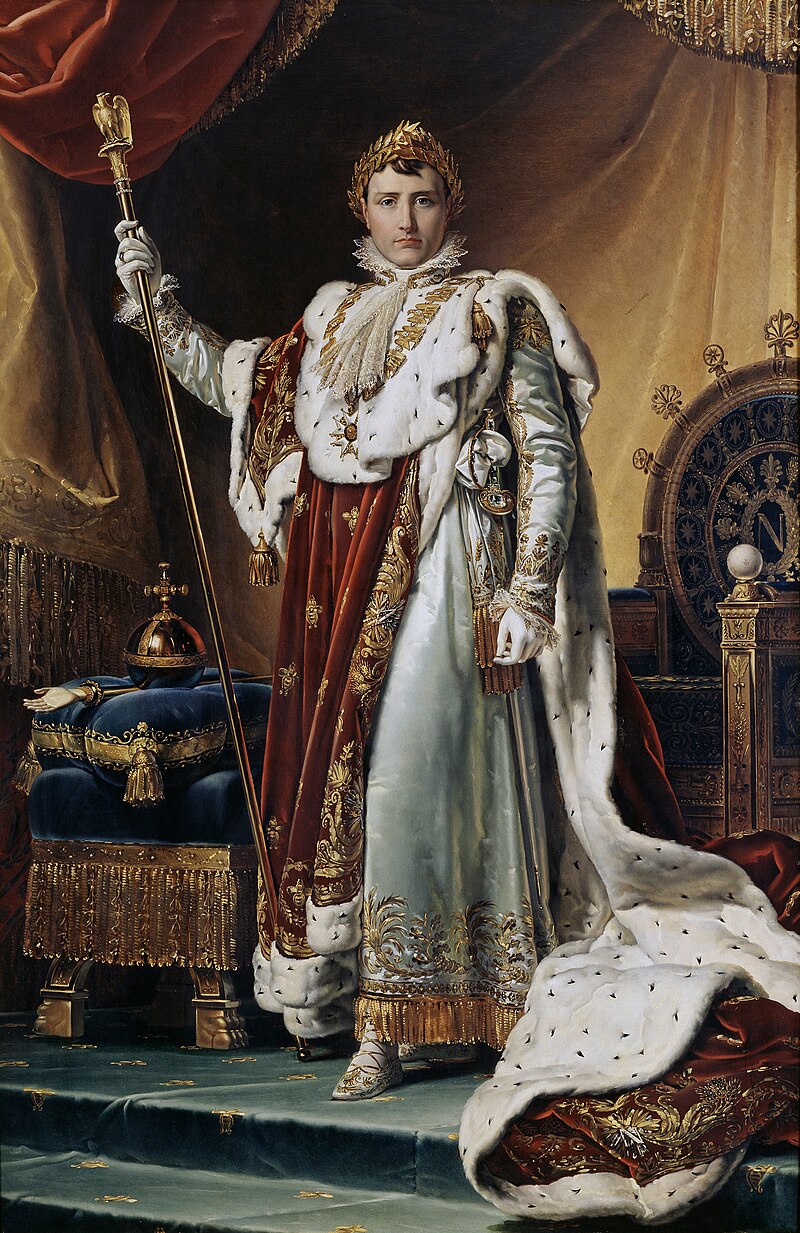
Napoleon Bonaparte as Emperor
France
Biography
4 min read
Updated By: History Editorial Network (HEN)
Published:
Updated:
Napoleon Bonaparte, originally the First Consul of the French Republic, transitioned to the role of Emperor of the French after a series of political maneuvers following the coup d'état in November 1799. His self-proclamation as Emperor in 1804 marked a pivotal shift in French governance, moving from a republic to an imperial structure. This change was not merely ceremonial; it reflected Napoleon's ambition to consolidate power and establish a strong centralized state. His reign was characterized by extensive military campaigns, which resulted in the expansion of French territory across much of Europe. Napoleon's military strategies and tactics are studied in military academies worldwide, as he is often regarded as one of the greatest military commanders in history. His ability to mobilize and lead large armies, coupled with innovative battlefield tactics, allowed him to achieve numerous victories against various coalitions of European powers.
The impact of Napoleon's reign extended beyond military conquests. His establishment of the Napoleonic Code reformed the legal system in France and influenced legal systems in many other countries. The code emphasized principles such as equality before the law and the secular nature of the state, which were revolutionary at the time. However, his aggressive expansionism also led to widespread conflict, culminating in the formation of coalitions against him. The eventual downfall of Napoleon, marked by his abdication in 1814, resulted in significant political changes in Europe, including the restoration of monarchies and the redrawing of national boundaries. His legacy remains complex, as he is remembered for both his contributions to statecraft and law, as well as the wars that caused immense suffering across the continent.
#mooflife
#MomentOfLife
#NapoleonBonaparte
#FrenchEmpire
#MilitaryHistory
#NapoleonicCode
#EuropeanHistory
Primary Reference
Napoleon

Explore the Life Moments of
 AI Twin