Treaty of Brétigny: End of First Phase of War
France
Political
3 min read
Updated By: History Editorial Network (HEN)
Published:
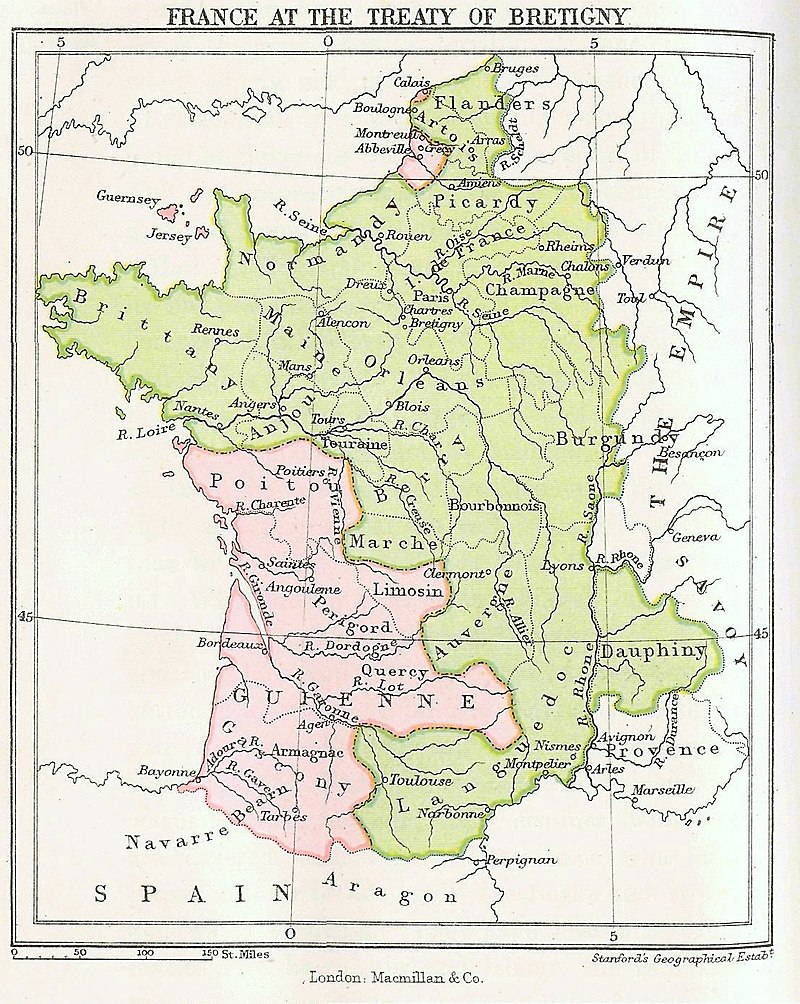
During the 14th century, the Hundred Years' War between England and France had taken its toll on both nations. The Treaty of Brétigny marked the end of the first phase of this protracted conflict. Negotiations took place at Brétigny-sur-Orge, resulting in this significant agreement. The treaty granted substantial territorial concessions to England, including Aquitaine, Calais, Ponthieu, and Gascony, among others.
This truce brought a temporary halt to the fighting, providing relief to the war-weary populations. The terms of the treaty were seen as favorable to England, granting them valuable lands in France. In return, King Edward III of England agreed to renounce his claim to the French crown. These concessions aimed to bring a semblance of peace after years of warfare.
The signing of the Treaty of Brétigny reshaped the political landscape between England and France at that time. The truce allowed both nations to regroup and reassess their strategies for the next phase of the conflict. The treaty's terms would have lasting effects on the subsequent stages of the Hundred Years' War, shaping the dynamics between the two powers for years to come.
#TreatyofBrétigny #HundredYearsWar #France-EnglandRelations

Explore the Life Moments of
 AI Twin