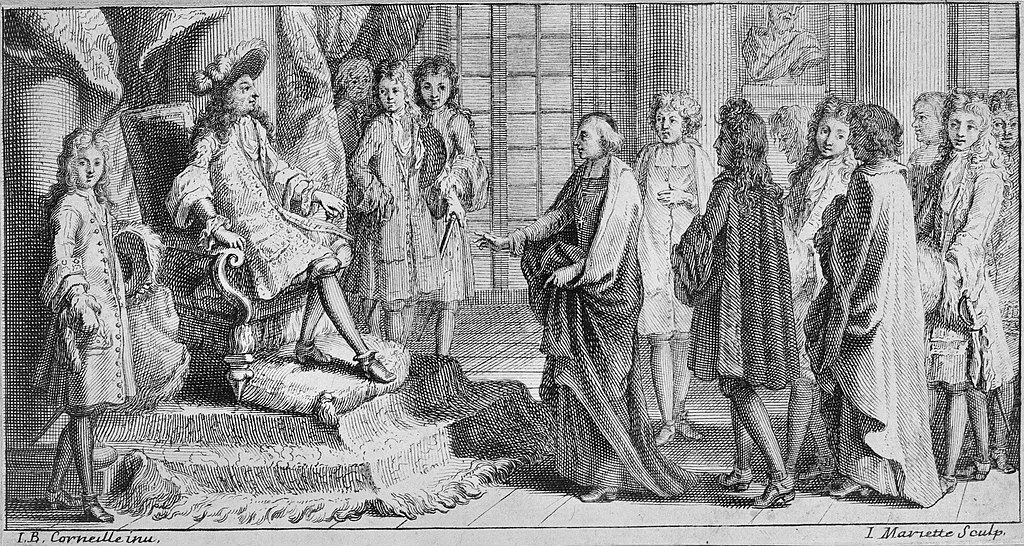
Establishment of the Académie Française by Cardinal Richelieu to regulate the French language and literature
France
10 min read
Updated By: History Editorial Network (HEN)
Published:
In 1181, the construction of the Monolithic Churches of Lalibela began in Ethiopia, a monumental undertaking that resulted in one of the most remarkable religious and architectural sites in the world. These rock-hewn churches, carved directly into the mountains of Lalibela, were created during the reign of King Lalibela of the Zagwe dynasty and are a testament to the devotion, artistry, and engineering prowess of the time. Today, they are a UNESCO World Heritage Site and hold immense significance in Ethiopian Orthodox Christianity.
Historical Context
King Lalibela, who ruled Ethiopia during the late 12th and early 13th centuries, is credited with the creation of these extraordinary churches. According to Ethiopian tradition, Lalibela was inspired to build a "New Jerusalem" in response to the Muslim conquest of Jerusalem in 1187, which made pilgrimage to the Holy Land increasingly difficult for Christians. This vision led to the establishment of Lalibela as a pilgrimage site within Ethiopia itself.
Architectural Marvels
The Monolithic Churches of Lalibela are renowned for their unique construction method. Unlike traditional buildings, these structures were not built from the ground up; instead, they were carved from solid volcanic rock. This technique involved excavating the rock to create free-standing structures surrounded by deep trenches and courtyards. The churches are interconnected by a series of tunnels and walkways, forming a labyrinthine complex.
There are eleven churches in Lalibela, divided into two main groups, with a smaller group of four churches situated between them:
Northern Group:
Biete Medhane Alem (House of the Saviour of the World): Believed to be the largest monolithic church in the world.
Biete Maryam (House of Mary): Known for its beautiful interior frescoes.
Biete Golgotha Mikael (House of Golgotha Mikael): Contains the tomb of King Lalibela.
Biete Meskel (House of the Cross).
Biete Denagel (House of Virgins).
Western Group:
Biete Giyorgis (House of St. George): Perhaps the most famous of all the churches, recognizable by its cruciform shape.
Eastern Group:
Biete Amanuel (House of Emmanuel).
Biete Qeddus Mercoreus (House of Saint Mercurius).
Biete Abba Libanos (House of Abbot Libanos).
Biete Gabriel-Rufael (House of Gabriel and Raphael).
Biete Lehem (House of Holy Bread).
Each church has its own distinctive architectural style and religious significance. The interiors are adorned with intricate carvings, frescoes, and religious symbols, demonstrating a blend of Aksumite traditions and influences from various Christian cultures.
Religious and Cultural Significance
The churches of Lalibela are not only architectural masterpieces but also hold profound religious importance. They remain active places of worship and are central to the spiritual life of Ethiopian Orthodox Christians. The site attracts thousands of pilgrims annually, particularly during major religious festivals such as Genna (Ethiopian Christmas) and Timkat (Epiphany), when the faithful come to participate in elaborate ceremonies and processions.
UNESCO World Heritage Site
In 1978, the Monolithic Churches of Lalibela were designated a UNESCO World Heritage Site, recognizing their outstanding universal value and the need to preserve this unique cultural heritage. The designation highlights the churches' significance as a symbol of Ethiopian identity and Christian heritage, as well as their architectural and historical importance.
Conclusion
The construction of the Monolithic Churches of Lalibela in 1181 marked a significant chapter in Ethiopia's religious and architectural history. These remarkable structures, carved from solid rock, continue to inspire awe and devotion, serving as a living testament to the ingenuity and spiritual fervor of the Ethiopian people. As a UNESCO World Heritage Site, the churches of Lalibela stand as a symbol of Ethiopia's rich cultural legacy and enduring faith.
Hashtags
#MomentsOfLife #MoofLife_Moment #MoofLife #Lalibela #EthiopianHistory #MonolithicChurches #UNESCO #WorldHeritage #EthiopianOrthodox #ReligiousSites #HistoricalArchitecture
1635 France Establishment of the Académie Française by Cardinal Richelieu to regulate the French language and literature
In 1635, Cardinal Richelieu, the chief minister to King Louis XIII of France, founded the Académie Française. This esteemed institution was established to regulate the French language and literature, playing a crucial role in shaping French cultural and intellectual life. The Académie Française remains one of the most prestigious and influential cultural institutions in the world.
Historical Context
The early 17th century was a period of significant political and cultural consolidation in France. Cardinal Richelieu, as the king’s chief minister, sought to strengthen the monarchy and centralize power. He recognized the importance of culture and language in achieving these goals and believed that a unified and refined French language would enhance national cohesion and prestige.
At this time, French society was experiencing a flourishing of arts and letters, influenced by the Renaissance and the early Baroque periods. However, there was also a lack of standardization in the French language, with considerable regional variations and inconsistencies in grammar, spelling, and usage.
Founding of the Académie Française
Cardinal Richelieu founded the Académie Française on February 22, 1635. The institution's primary mission was to standardize and preserve the French language, ensuring its purity and elegance. The Académie was tasked with producing a comprehensive dictionary of the French language, setting grammatical rules, and providing guidance on literary style.
The original members of the Académie were a group of literary figures and scholars, known as "les Quarante" (the Forty), reflecting the fixed number of seats in the institution. These "immortals," as the members are called, were selected for their literary and intellectual achievements and were responsible for the Académie's ongoing work.
Mission and Activities
The Académie Française's foundational task was the compilation of a dictionary. The first edition of the Dictionnaire de l'Académie Française was published in 1694, nearly six decades after the Académie's founding. This dictionary established standardized spellings, definitions, and usages for French words, significantly influencing the development of the French language.
Beyond lexicography, the Académie also focused on literature, issuing guidelines and judgments on literary works. It became a central arbiter of literary taste and standards, promoting clarity, precision, and propriety in writing. The Académie also recognized and rewarded literary excellence through various prizes and honors.
Influence and Legacy
The establishment of the Académie Française had a profound impact on French language and culture. It contributed to the standardization and enrichment of the French language, fostering a sense of national identity and unity. The Académie's work helped elevate French literature, establishing it as a dominant cultural force in Europe.
The influence of the Académie extended beyond France. Its emphasis on linguistic purity and clarity inspired similar institutions in other countries, such as the Accademia della Crusca in Italy and the Royal Spanish Academy. The Académie's model of a state-supported cultural institution dedicated to language and literature set a precedent for national academies around the world.
Modern Role
Today, the Académie Française continues to play a vital role in French cultural life. It remains dedicated to preserving the French language, regularly updating its dictionary and providing recommendations on language use. The Académie also promotes French literature and culture through its various prizes and publications.
Despite its venerable history, the Académie has faced criticism and challenges in modern times, particularly regarding its perceived conservatism and resistance to linguistic change. Nevertheless, it remains a respected and influential institution, symbolizing the enduring importance of language and literature in French society.
#MomentsOfLife #MoofLife_Moment #MoofLife #AcadémieFrançaise #FrenchHistory #Language #Literature #CardinalRichelieu #CulturalHeritage #Linguistics #1635 #FrenchCulture

Explore the Life Moments of
 AI Twin