FijiFirst Party Retains Majority in Tight Election
Fiji
Political
Economic Downturn
5 min read
Updated By: History Editorial Network (HEN)
Published:
Updated:
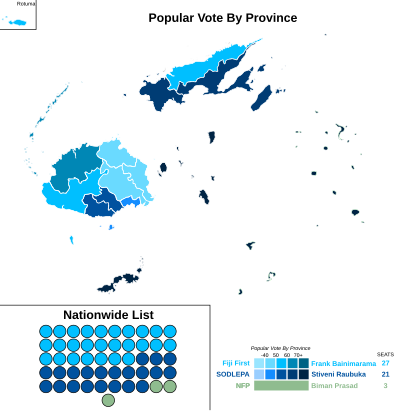
In the general election, Bainimarama’s FijiFirst Party retained its majority in the Fijian Parliament by a narrow margin. FijiFirst, led by incumbent Prime Minister Frank Bainimarama, secured around 50.02% of the total votes, translating to 27 seats in the 51-seat legislature. This outcome allowed Bainimarama to continue his term as Prime Minister, albeit with a significantly reduced majority compared to previous elections.
The election was noted for its relatively high voter turnout, with nearly 72% of the registered voters casting their ballots. The main opposition party, the Social Democratic Liberal Party (SODELPA), led by Sitiveni Rabuka, gained approximately 39.85% of the vote, earning 21 seats. The remaining votes and seats were distributed among smaller parties, including the National Federation Party (NFP), which secured three seats.
This election carried substantial importance for Fiji's democratic processes. Bainimarama, who had initially come to power through a military coup, had been seeking to consolidate his democratic legitimacy through the electoral process. Despite the narrow victory, the result demonstrated a competitive political landscape in Fiji, indicating growing support for alternative parties and viewpoints among the electorate.
The Fijian economy, heavily reliant on tourism, sugar exports, and remittances, continued to face significant challenges. The government faced ongoing issues related to infrastructure development, environmental sustainability, and political stability. The close election results underscored a fractured political environment, raising questions about governance and the future political direction of the island nation.
The international community closely monitored the elections, recognizing them as a critical step in solidifying Fiji’s return to democratic governance after years of political instability. Observers were largely satisfied with the electoral process, though they noted areas needing improvement for future elections.
Overall, while FijiFirst's narrow retention of its parliamentary majority ensured continuity in leadership, it also highlighted the dynamic and evolving nature of Fijian politics.
#FijiPolitics #FijiFirst #Election #Democracy #ParliamentaryMajority #MoofLife

Explore the Life Moments of
 AI Twin