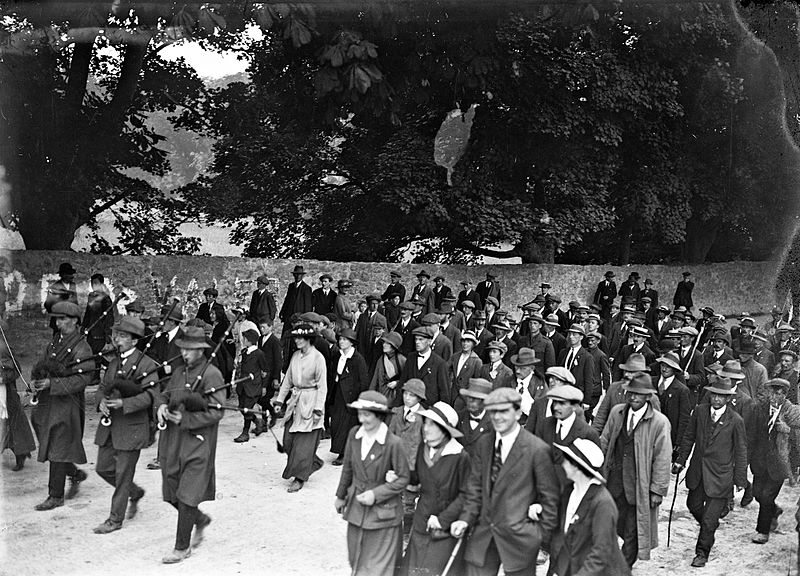
Constance Markievicz Became First Woman Elected in Ireland
Irish History
Women's Rights
Political History
4 min read
Updated By: History Editorial Network (HEN)
Published:
Updated:
Constance Markievicz, representing Sinn Féin, became the first woman elected in Ireland, marking a pivotal moment in the political landscape of the country. Her election was made possible by the Parliament (Qualification of Women) Act, which allowed women to stand for election and vote. This legislative change was a response to the growing suffrage movement and the increasing demand for women's rights in the political sphere. Despite being one of the 17 women nominated among approximately 1,700 candidates, Markievicz's victory was notable not only for her gender but also for her strong nationalist stance. She was a prominent figure in the struggle for Irish independence and her election symbolized a shift towards greater representation of women in politics, although it was still a long journey ahead for women's rights in Ireland.
Markievicz's decision to refuse her seat in the British Parliament was a significant act of defiance, reflecting her commitment to Irish nationalism and her belief in the need for Irish self-governance. Her election and subsequent refusal to take her seat highlighted the complexities of women's political participation during a time of national upheaval. The impact of her election extended beyond her own political career; it inspired future generations of women to engage in politics and advocate for their rights. Markievicz's legacy is remembered as a crucial part of both the women's suffrage movement and the fight for Irish independence, illustrating the intertwined nature of these struggles in the early 20th century.
#mooflife
#MomentOfLife
#ConstanceMarkievicz
#FirstWomanElected
#IrishPolitics
#Women'sSuffrage
#SinnFéin

Explore the Life Moments of
 AI Twin