Fitzgerald's Journey from Despair to Military Service
Camp Sheridan, Alabama, United States
Mental Health
Literature
6 min read
Updated By: History Editorial Network (HEN)
Published:
Updated:
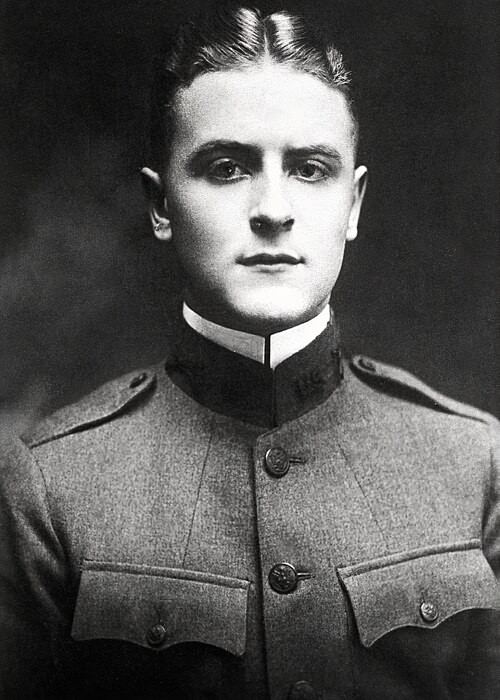
In 1917, amid the turmoil of World War I, F. Scott Fitzgerald, grappling with personal despair after being rejected by Ginevra, made the significant decision to enlist in the United States Army.
In 1917, facing academic failure at Princeton and heartbroken after losing Ginevra King, F. Scott Fitzgerald enlisted in the U.S. Army, commissioning as a second lieutenant. Stationed at Camp Sheridan, Alabama, he wrote "This Side of Paradise" while training, and met his future wife, Zelda Sayre, after the 1918 Armistice canceled his overseas deployment.
- Motivation: Following his rejection by wealthy Ginevra King (who inspired Daisy Buchanan) and the pressure of WWI, he sought a romanticized, gallant escape from personal despair.
- Military Service: He served in the army, specifically with the 9th Division, but never saw combat, a disappointment he carried with him.
- Key Outcomes: During his time in Alabama, he wrote a first draft of This Side of Paradise, and his romance with Zelda Sayre, another Southern belle, began, mirroring his previous heartbreak.
- Commission: He was commissioned as a second lieutenant in the infantry in late 1917 after dropping out of Princeton University.
Deployment Status: Although he feared dying in combat and was ready to be sent overseas, the Armistice in November 1918 ended his military career before he left the U.S..
- Training & Command: He was stationed at Camp Sheridan in Montgomery, Alabama, and Fort Leavenworth, Kansas. While training, he was under the command of Captain Dwight D. Eisenhower, whom he reportedly disliked.
- Writing & Love Life: While serving, he wrote his first novel, "The Romantic Egotist" (later This Side of Paradise) and met Zelda Sayre, a local belle who would become his wife.
- Regrets: Fitzgerald later expressed regret over never getting to experience combat, calling himself "the army's worst aide-de-camp".
His enlistment was not merely a patriotic duty; it was also a reflection of his troubled state of mind, as he hoped to find solace in the chaos of war, even contemplating death in combat. Fitzgerald received a commission as a second lieutenant, a role that placed him in a position of responsibility and leadership. While awaiting deployment to the Western Front, he was stationed at Fort Leavenworth, where he came under the command of Captain Dwight D. Eisenhower, who would later rise to prominence as a general and eventually become President of the United States. Fitzgerald's time at Fort Leavenworth was marked by tension; he reportedly chafed under Eisenhower's authority and developed a strong dislike for him. This period of Fitzgerald's life not only highlights his complex character but also places him in the context of a significant historical moment, where personal struggles intersected with the broader narrative of a world at war.
#mooflife #MomentOfLife #WorldWarI #UnitedStatesArmy #DwightD.Eisenhower #MilitaryHistory
#F.ScottFitzgerald
Primary Reference
Fitzgerald, F. Scott

Explore the Life Moments of
 AI Twin