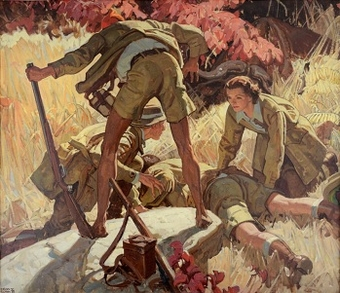
Margot Macomber in Hemingway's 'The Short Happy Life of Francis Macomber'
United States of America
Literature
Character Analysis
Hemingway
3 min read
Updated By: History Editorial Network (HEN)
Published:
Updated:
Published in 1936, Ernest Hemingway's short story 'The Short Happy Life of Francis Macomber' explores complex themes of masculinity, courage, and the dynamics of marriage. The narrative centers around Francis Macomber, a wealthy American on a safari in Africa, and his wife, Margot Macomber. Critics have often described Margot as a 'murderess' and a 'bitch woman,' highlighting her manipulative and destructive nature within the story. This characterization inverts the traditional American literary trope of the 'Dark Woman' versus the 'Light Woman.' While characters like Brett Ashley from 'The Sun Also Rises' embody the seductive and powerful 'Dark Woman,' Margot represents a more sinister version of the 'Light Woman.' Her actions and motivations raise questions about gender roles and the nature of happiness, ultimately leading to a tragic conclusion. Hemingway's vivid descriptions and psychological depth make this story a significant work in his oeuvre, inviting readers to reflect on the complexities of human relationships and the often harsh realities of life. The story remains a critical point of discussion in literary studies, particularly in the context of gender dynamics and Hemingway's portrayal of women. #mooflife #mof #MomentOfLife #Hemingway #FrancisMacomber #MargotMacomber #LiteraryAnalysis #GenderDynamics

Explore the Life Moments of
 AI Twin