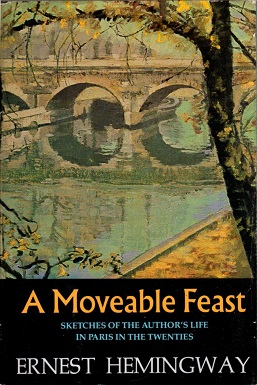
Hemingway's Posthumous Memoir: A Moveable Feast
United States of America
Literature
Biography
American Authors
4 min read
Updated By: History Editorial Network (HEN)
Published:
Updated:
A Moveable Feast is Ernest Hemingway’s love letter to 1920s Paris, a city that shaped him as a writer and a man. Published posthumously in 1964, this memoir offers a nostalgic yet unfiltered glimpse into his early years as a struggling journalist and aspiring novelist. Through a series of vignettes, Hemingway paints a vivid picture of his days spent writing in cafés, walking along the Seine, and sharing conversations with literary icons like F. Scott Fitzgerald, Gertrude Stein, and Ezra Pound. His prose, crisp and evocative, captures both the romance and hardships of bohemian life, where art and ambition often collided with poverty and self-doubt. It is a book drenched in memory—of love, laughter, and the intoxicating allure of youth, reminding us that even in retrospect, certain moments remain eternal.
Beyond its literary charm, A Moveable Feast is a deeply personal reflection on time, change, and the people who shape us. Hemingway revisits his first wife, Hadley, with tenderness, contrasting their early happiness with the eventual unraveling of their marriage. There is an air of wistfulness in his words, as if he is attempting to recapture something lost—both in Paris and in himself. More than just a memoir, this book is a testament to the idea that some places, some periods of life, are unforgettable, always waiting to be revisited in our minds. As Hemingway famously wrote, “If you are lucky enough to have lived in Paris as a young man, then wherever you go for the rest of your life, it stays with you, for Paris is a moveable feast.”
#AMoveableFeast #Hemingway #ParisInThe1920s #LiteraryMemories #BohemianLife #MomentOfLife #MoofLife

Explore the Life Moments of
 AI Twin