Accompanying Martha to China
Primarily Chongqing (Chungking) and other areas affected by the Sino-Japanese War, China
Literature
Author Studies
Cultural Analysis
Journalism
AmericanHistory
10 min read
Updated By: History Editorial Network (HEN)
Published:
Updated:
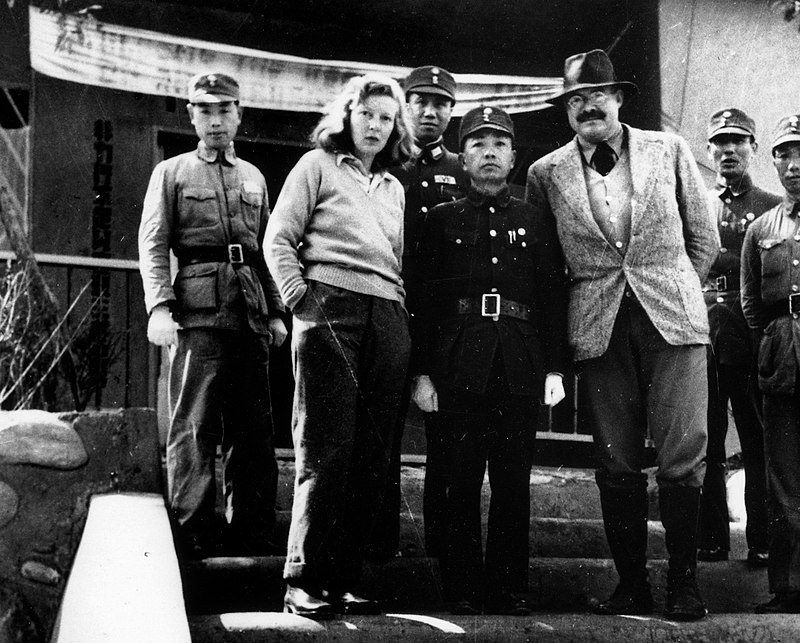
In January 1941, renowned author Ernest Hemingway accompanied his then-wife, journalist Martha Gellhorn, on her assignment to China for Collier's magazine. Despite his lack of enthusiasm for the trip and the country itself, Hemingway utilized the opportunity to send dispatches to the newspaper PM. His writings provided sharp and insightful commentary on the ongoing Sino-Japanese War, highlighting the complexities of the conflict and the implications of Japanese military actions in the region. Hemingway's analysis suggested that these incursions could potentially ignite an 'American war in the Pacific', a prescient observation given the historical context. This journey not only showcased Hemingway's journalistic prowess but also contributed to the broader understanding of the geopolitical tensions of the time. His dispatches were marked by a blend of personal reflection and critical analysis, reaffirming his status as a significant literary figure during a tumultuous period in history.
In January 1941, Ernest Hemingway, already a literary giant, found himself far from the cafés of Paris or the battlefields of Spain. Instead, he was navigating the chaos and uncertainty of wartime China, accompanying his third wife, Martha Gellhorn, a rising star in war journalism. Gellhorn had accepted an assignment from Collier’s magazine to report on the Sino-Japanese War, and Hemingway, though reluctant about both the destination and the nature of the journey, joined her — not entirely as a spectator, but as a correspondent in his own right.
While Gellhorn traveled with purpose and professional focus, Hemingway’s role was more complicated. His relationship with China was cool at best; he reportedly disliked the country and showed little personal interest in its culture or politics. Yet, despite these reservations, Hemingway began filing dispatches for the New York newspaper PM, where his sharp analysis and blunt observations gave readers a sobering look into a conflict that, in early 1941, many Americans still viewed as distant.
A War in Progress - and a War to Come:
At the time of Hemingway's trip, China had been embroiled in a brutal war with Japan since 1937, a conflict that many now view as a full-scale part of World War II. The atrocities committed by the Japanese military, the suffering of Chinese civilians, and the crumbling infrastructure of resistance cities like Chongqing (Chungking) made for a grim backdrop. Hemingway’s dispatches captured that reality with his characteristic economy of language and moral clarity.
He didn’t hold back in describing the ruthlessness of Japanese military aggression, nor did he hesitate to criticize the fragility and corruption he saw within parts of the Chinese resistance. But what stands out most in Hemingway’s reporting is his prescient warning: he argued that the unchecked actions of Japan in the Pacific region could inevitably draw the United States into war. This was months before the attack on Pearl Harbor in December 1941.
In one of his reports, Hemingway referred to a potential “American war in the Pacific,” a phrase that underscored his keen understanding of geopolitical momentum. For a writer more often associated with fiction and personal bravado, this kind of foresight gave weight to his journalistic credibility.
Tensions Behind the Scenes:
The China trip was not just geopolitically fraught — it was also personally turbulent. Hemingway and Gellhorn's marriage was already strained, and the trip intensified the emotional distance between them. Gellhorn, deeply committed to her role as a war correspondent, operated with independence and seriousness. Hemingway, less interested in being overshadowed, reportedly became resentful of her rising professional stature.
While Gellhorn conducted extensive interviews and documented the human cost of the war, Hemingway often approached his dispatches with a mixture of cynicism and performative machismo. Nonetheless, his writing from this period revealed his ability to observe and interpret war not just as a spectacle of violence, but as a collision of ideology, ambition, and suffering.
A Lesser-Known Chapter in Hemingway’s Life:
Hemingway’s 1941 China trip is often overlooked in the broader arc of his career, but it remains a key moment where his roles as author, observer, and reluctant journalist intersected. His experiences — and frustrations — during the journey were later echoed in his posthumous work and personal letters. The blend of critical detachment and underlying anxiety in his China dispatches contributed to the literary record of a world on the brink.
It also marked one of the last times Hemingway and Gellhorn would work in tandem. By 1945, their marriage would end, in no small part due to professional rivalry and personal divergence. Still, both left behind important wartime reporting that helped shape public understanding during one of the most volatile periods of the 20th century.
#ErnestHemingway
#MarthaGellhorn
#Sino-japaneseWar

Explore the Life Moments of
 AI Twin