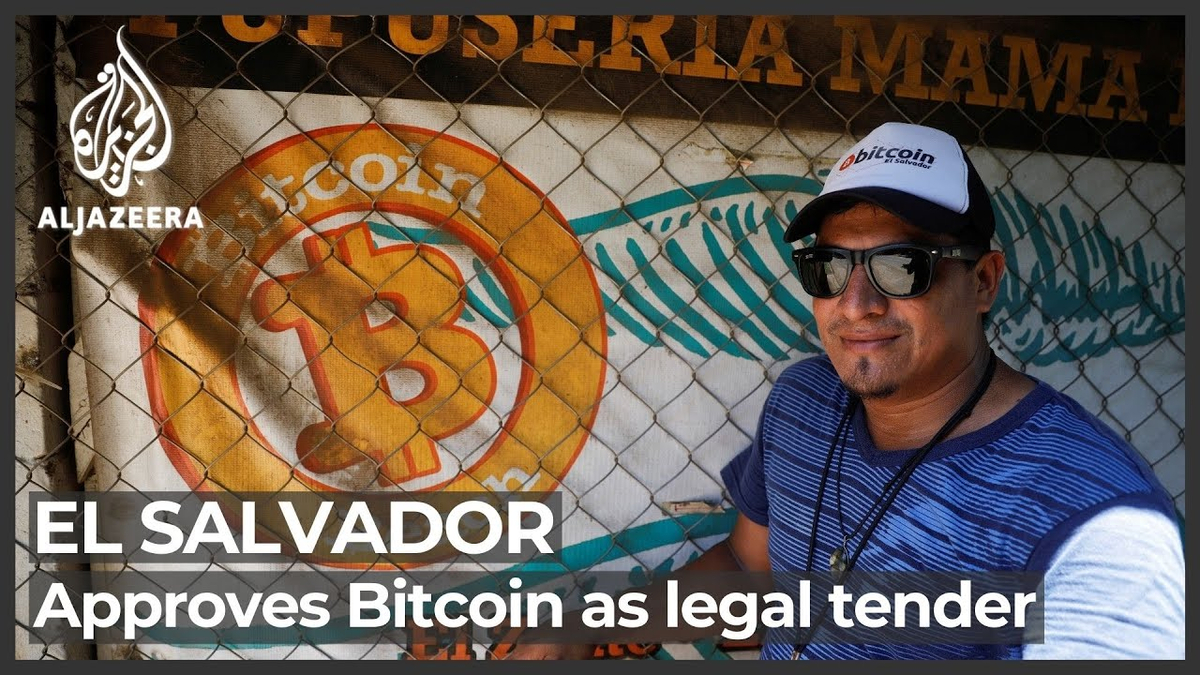
El Salvador adopted the Bitcoin as its legal tender under the direction of Bukele.
El Salvador

10 min read
Updated By: History Editorial Network (HEN)
Published:
On June 5, 2021, El Salvador made headlines around the world when its President, Nayib Bukele, announced plans to adopt Bitcoin as legal tender. This groundbreaking decision, which was officially passed into law just a few days later on June 9, 2021, positioned El Salvador as the first country in the world to recognize a cryptocurrency as an official currency alongside the U.S. dollar. This bold move, spearheaded by Bukele, aimed to transform El Salvador's economy, enhance financial inclusion, and reduce the costs of remittances, which are a vital lifeline for many Salvadorans.
Background and Motivations
El Salvador's decision to adopt Bitcoin as legal tender was driven by several factors, primarily economic and social. The country has long struggled with high levels of poverty, limited access to financial services, and dependence on remittances from Salvadorans living abroad. Remittances constitute about 20% of El Salvador's GDP, with millions of Salvadorans relying on these funds to support their families.
However, traditional remittance channels, such as banks and money transfer services, often come with high fees and delays. By adopting Bitcoin, Bukele hoped to lower these costs and speed up the transfer process, allowing Salvadorans to receive more of the money sent to them. Additionally, the move was intended to boost financial inclusion in a country where about 70% of the population did not have access to traditional banking services.
Bukele also saw Bitcoin as a way to attract foreign investment, stimulate economic growth, and modernize the country's financial infrastructure. The decision was presented as part of a broader vision to turn El Salvador into a global hub for cryptocurrency innovation.
The Legislative Process
Following Bukele's announcement on June 5, 2021, the proposal to adopt Bitcoin as legal tender was rapidly pushed through the Legislative Assembly of El Salvador, where Bukele's party, Nuevas Ideas, held a strong majority. On June 9, 2021, the "Bitcoin Law" was passed by the assembly with 62 out of 84 votes in favor.
The law established that Bitcoin would become legal tender in El Salvador, meaning that businesses and individuals would be required to accept it as payment for goods and services, just as they would the U.S. dollar. The law also outlined the creation of a government-backed digital wallet called "Chivo," which would be provided to all Salvadorans. The Chivo wallet would allow users to send and receive payments in Bitcoin or U.S. dollars and would come preloaded with a $30 incentive to encourage adoption.
Implementation and Challenges
The implementation of Bitcoin as legal tender officially began on September 7, 2021, when the law took effect. On this day, El Salvador became the first country in the world to accept Bitcoin as an official currency.
However, the rollout was not without challenges. Technical issues plagued the Chivo wallet on its launch day, causing delays and frustration among users. Additionally, there was significant skepticism and resistance among the Salvadoran population, with many expressing concerns about the volatility of Bitcoin and the potential risks associated with its adoption. Protests were held in the capital, San Salvador, by citizens and activists who opposed the law, fearing it could destabilize the economy and disproportionately affect the poor.
Internationally, the move was met with mixed reactions. While some in the cryptocurrency community hailed it as a historic moment for Bitcoin and a step towards broader adoption of digital currencies, others, including institutions like the International Monetary Fund (IMF) and the World Bank, raised concerns about the potential economic risks and the lack of regulatory oversight.
Impact and Legacy
The long-term impact of El Salvador's Bitcoin experiment remains to be fully seen. In the short term, the adoption of Bitcoin has brought significant attention to El Salvador, both positive and negative. The government has touted the success of the initiative, pointing to increased financial inclusion and the potential for economic growth. However, the volatility of Bitcoin has also raised concerns about its suitability as a stable currency.
El Salvador's bold move has inspired discussions about the future of money and the role of cryptocurrencies in the global financial system. It has also prompted other countries to consider the potential benefits and risks of adopting digital currencies.
As El Salvador continues to navigate the challenges of integrating Bitcoin into its economy, the world watches closely. The experiment in this small Central American nation could have far-reaching implications for the future of cryptocurrencies and their role in the global economy.
#MomentsOfLife #MoofLife_Moment #MoofLife #Bitcoin #ElSalvador #Cryptocurrency #FinancialInnovation #Bukele
Explore the Life Moments of
 AI Twin