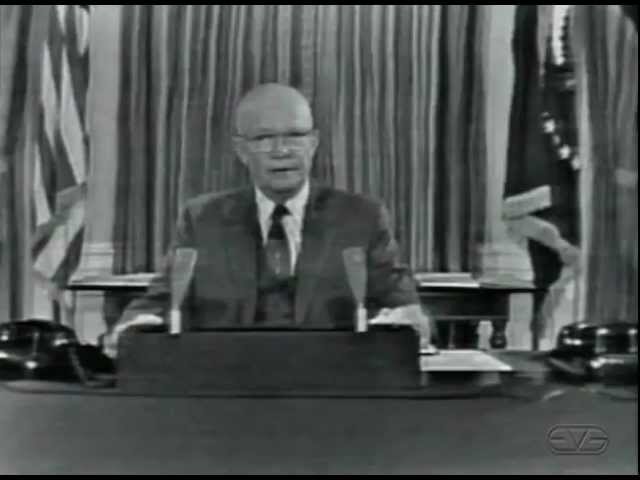
Eisenhower's Final Televised Address to Nation
Politics
Television
4 min read
Updated By: History Editorial Network (HEN)
Published:
Updated:
Eisenhower's final televised address to the nation was delivered from the Oval Office, where he addressed critical issues facing the United States at the end of his presidency. He focused on the ongoing Cold War, describing it as a confrontation with a hostile ideology that was global in scope and atheistic in character. This framing highlighted the ideological battle between the United States and the Soviet Union, which had significant implications for U.S. foreign policy and military strategy. Eisenhower's speech also included a cautionary note regarding the military-industrial complex, a term he coined to describe the relationship between the military and defense contractors. He warned that this complex could gain unwarranted influence over national policy, potentially undermining democratic processes and civil liberties.
Eisenhower emphasized the importance of an informed and vigilant citizenry in maintaining the balance between national security and individual freedoms. He argued that citizens must remain engaged and knowledgeable to prevent the overreach of military power and to ensure that democracy is preserved. His address served as a call to action for Americans to be aware of the potential dangers posed by unchecked military influence and to actively participate in the democratic process. The impact of this speech has been felt in subsequent discussions about military spending, foreign policy, and the role of citizens in governance, making it a pivotal moment in American political discourse.
#mooflife
#MomentOfLife
#Eisenhower
#FarewellAddress
#ColdWar
#Military-industrialComplex
#CitizenEngagement
(3))
Explore the Life Moments of
 AI Twin