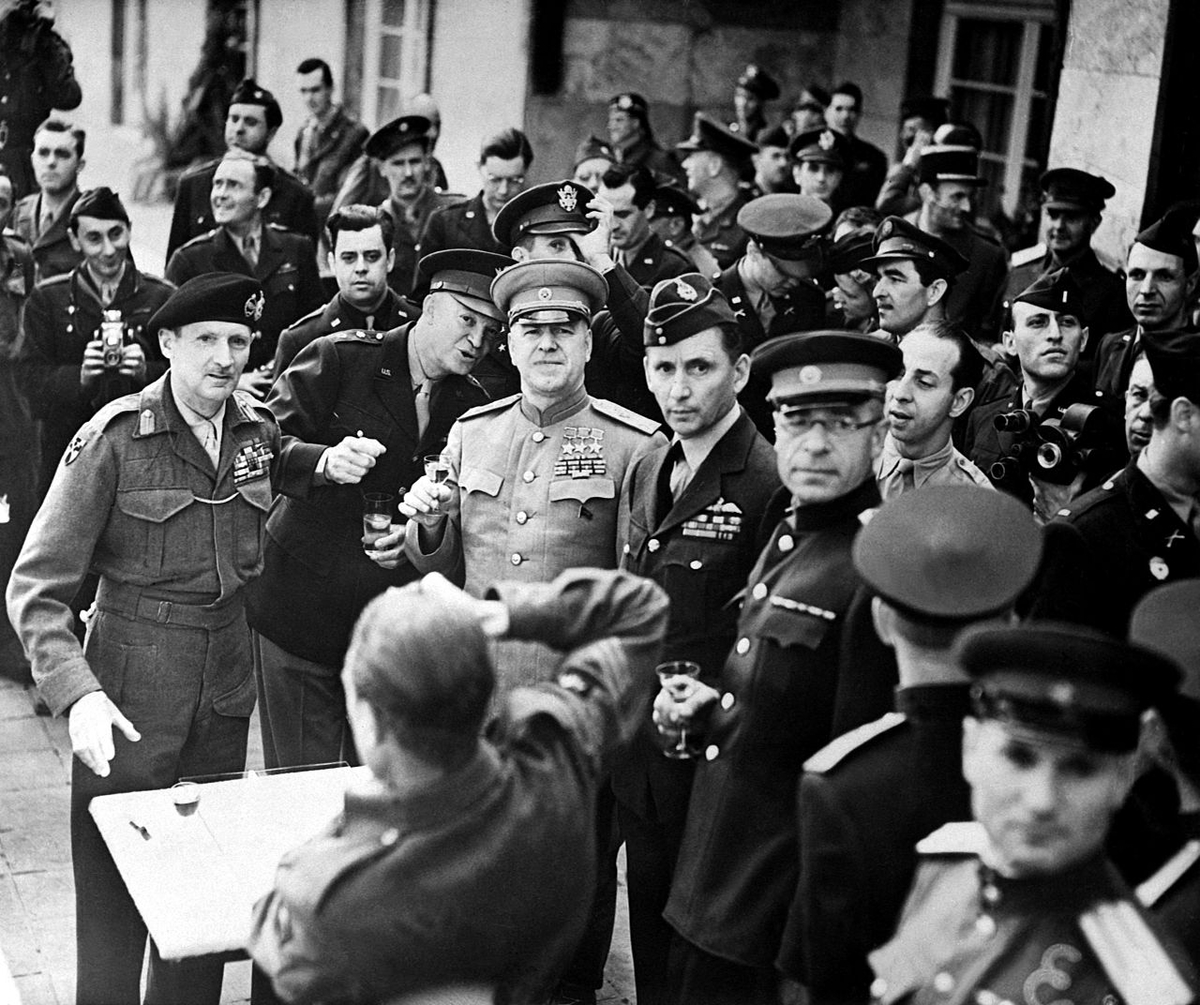
Eisenhower Promoted to General of the Army
Military History
Leadership
World War II
4 min read
Updated By: History Editorial Network (HEN)
Published:
Updated:
Eisenhower's promotion to General of the Army marked a pivotal moment in his military career and the broader context of World War II. This rank, equivalent to Field Marshal in many European armies, was a recognition of his leadership role within the Allied command. Eisenhower's ability to navigate complex relationships with key figures such as Winston Churchill, Field Marshal Bernard Montgomery, and General Charles de Gaulle was crucial in maintaining unity among the Allies. Despite facing strategic disagreements, particularly with Churchill and Montgomery, Eisenhower's diplomatic skills allowed him to foster collaboration and mutual respect. His interactions with Soviet Marshal Zhukov also highlighted his capacity to build alliances across different military cultures, which was essential for the success of the Allied forces.
Eisenhower's leadership style was characterized by his ability to earn the respect of front-line commanders, despite his lack of direct combat experience. His strategic vision and organizational skills were instrumental in coordinating large-scale military operations, including the planning of the D-Day invasion. The promotion to General of the Army not only elevated his status but also underscored the trust placed in him by his peers and superiors. This trust was reflected in the successful execution of complex military strategies that required cooperation among diverse Allied forces. Eisenhower's tenure in this role contributed significantly to the eventual defeat of Axis powers, shaping the post-war landscape in Europe and establishing the United States as a dominant military power.
#mooflife
#MomentOfLife
#Eisenhower
#GeneralOfTheArmy
#WorldWarIi
#AlliedCommand
#MilitaryLeadership
Primary Reference
Dwight_D._Eisenhower
(3))
Explore the Life Moments of
 AI Twin