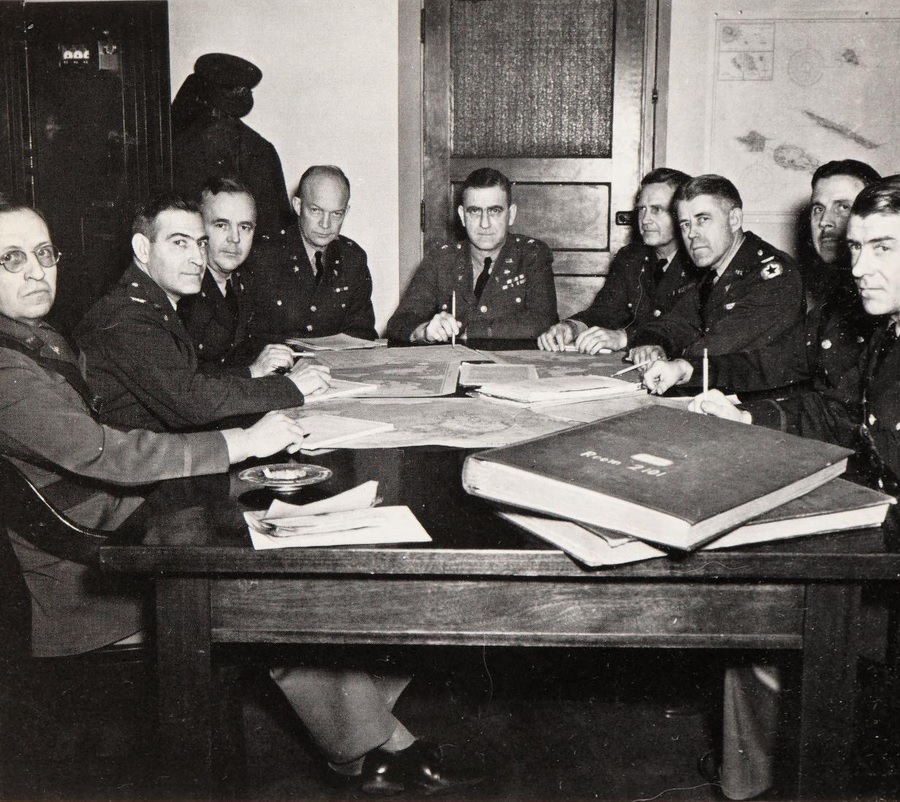
Eisenhower appointed Supreme Allied Commander
World War II
Military Leadership
Historical Events
3 min read
Updated By: History Editorial Network (HEN)
Published:
Updated:
In December 1943, President Roosevelt appointed General Dwight D. Eisenhower as the Supreme Allied Commander in Europe, a pivotal decision that shaped the course of World War II. This appointment came at a time when the Allies were preparing for a large-scale invasion of Nazi-occupied Europe. Eisenhower's leadership was crucial as he took command of the European Theater of Operations, United States Army (ETOUSA), and was designated as the Supreme Allied Commander of the Allied Expeditionary Force (SHAEF). His role involved coordinating the military efforts of multiple nations, including the United States, the United Kingdom, and other Allied forces, which required extensive planning and collaboration among diverse military leaders and strategies.
Eisenhower's strategic vision and ability to unify the Allied forces were instrumental in the success of major operations, including the planning of D-Day, the Allied invasion of Normandy. His leadership style emphasized consensus-building and effective communication, which were vital in managing the complexities of a multinational military campaign. Under his command, the Allies achieved significant victories that ultimately led to the defeat of Nazi Germany in May 1945. Eisenhower's appointment not only marked a turning point in the war but also established a framework for future military cooperation among Allied nations, influencing post-war military and political relations.
#mooflife
#MomentOfLife
#Eisenhower
#SupremeAlliedCommander
#WorldWarIi
#AlliedForces
#MilitaryLeadership
Primary Reference
Dwight D. Eisenhower
(3))
Explore the Life Moments of
 AI Twin