Tess of the d'Urbervilles
Film
Literature Adaptation
Silent Film
4 min read
Updated By: History Editorial Network (HEN)
Published:
Updated:
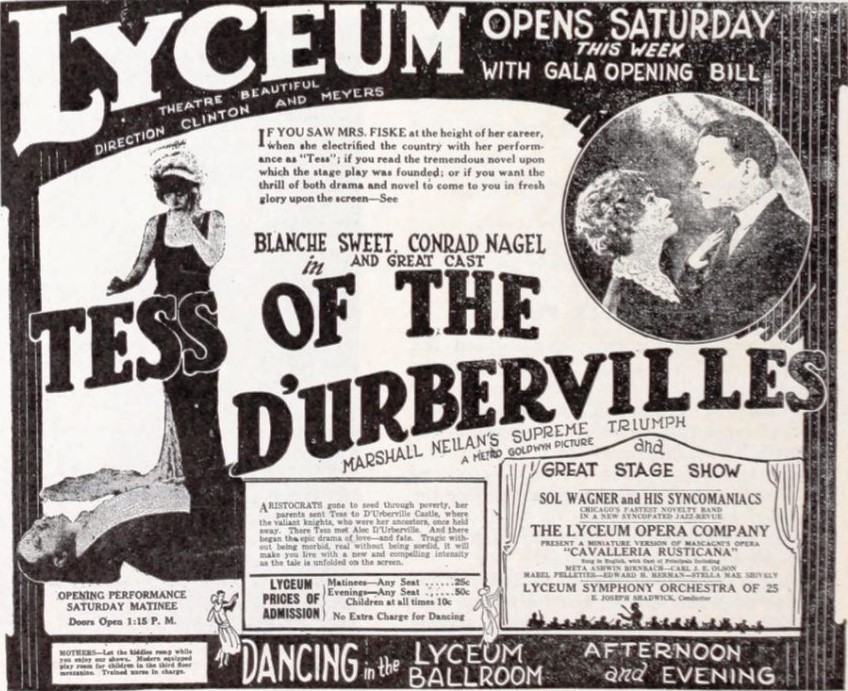
The film 'Tess of the d'Urbervilles', directed by Marshall Neilan, is an adaptation of Thomas Hardy's novel of the same name. This silent film was produced during a time when adaptations of literary works were becoming increasingly popular in cinema. The narrative follows the life of Tess, a young woman from a poor family who discovers her noble ancestry and faces various societal challenges. The film captures the themes of fate, social class, and the struggles of women in a patriarchal society, which are central to Hardy's original work. The production of 'Tess of the d'Urbervilles' reflects the early 20th-century cinematic techniques and storytelling methods, which often relied on visual expression due to the absence of synchronized sound. The film's release contributed to the growing interest in adapting classic literature for the screen, paving the way for future filmmakers to explore similar themes and narratives. The impact of this film can be seen in the continued adaptations of Hardy's works, as well as the broader trend of literary adaptations in the film industry. The film's exploration of complex characters and moral dilemmas resonates with audiences, highlighting the timeless nature of Hardy's storytelling. As a silent film, it also represents a significant period in cinematic history, showcasing the artistry of visual storytelling before the advent of sound in film. The legacy of 'Tess of the d'Urbervilles' endures, influencing both literature and film, and serving as a reference point for discussions about adaptation and fidelity to source material.
#mooflife
#MomentOfLife
#TessOfTheD'urbervilles
#MarshallNeilan
#SilentFilm
#ThomasHardy
#FilmAdaptation
Primary Reference
Tess of the d'Urbervilles (1924 film)

Explore the Life Moments of
 AI Twin